
Wet season · May–October · what to do when it rains
Phú Quốc in the rainy season: how to plan around the showers
Every June a guest writes to ask the same thing: is Phú Quốc in the rainy season a mistake? Luna sits on Bãi Trường, on the west coast where the afternoon showers come in first, so here is the honest answer from the front desk — not from a brochure. The short version: the wet season is the island’s quietest, cheapest, greenest stretch, and most days you still get a swim and a sunset. You just plan around the weather instead of pretending it isn’t there.
What the Phú Quốc rainy season actually looks like
The wet season runs May to October, with the heart of it July to September. The picture in most people’s heads — grey skies, rain all day — is wrong. A typical rainy-season day on Phú Quốc is warm and bright in the morning, with a heavy shower rolling through in the late afternoon or overnight. The rain is loud and short, often gone in an hour, and the air afterwards is cool and clean.
Daytime temperatures sit around 27–30°C with high humidity. Mornings are the reliable window: that’s when we send guests to the beach, on a scooter run, or out to lunch. By three or four o’clock you want a plan that has a roof. The sea on the west coast — our side, Bãi Trường — gets choppier in the rainy season because the southwest wind blows straight onshore.
The rainy season, month by month
- May. The first showers arrive, usually late in the day. The first short season of tràm mushrooms is on at the markets.
- June. The pattern settles: bright mornings, a shower in the afternoon. The sun sets at its latest, close to half past six. Tết Đoan Ngọ, on the fifth day of the fifth lunar month, usually falls in June.
- July and August. The heart of the season. The streams are running, the forest is at its greenest, and the second, bigger mushroom harvest comes in. Bãi Khem and Bãi Sao are the calm-water beaches. Rooms cost the least from July to September.
- September. With October, the quietest stretch of the year. Mid-Autumn lanterns appear at the markets, and the fishermen hold Nghinh Ông on Dương Đông harbour around the same days.
- October. Still green, with the showers thinning late in the month as the wind begins to turn. Gành Dầu holds its Nguyễn Trung Trực days around early October.
The lunar festivals move by a few weeks each year, so check the date for the year you are coming.
Which beaches stay calm when the southwest wind blows
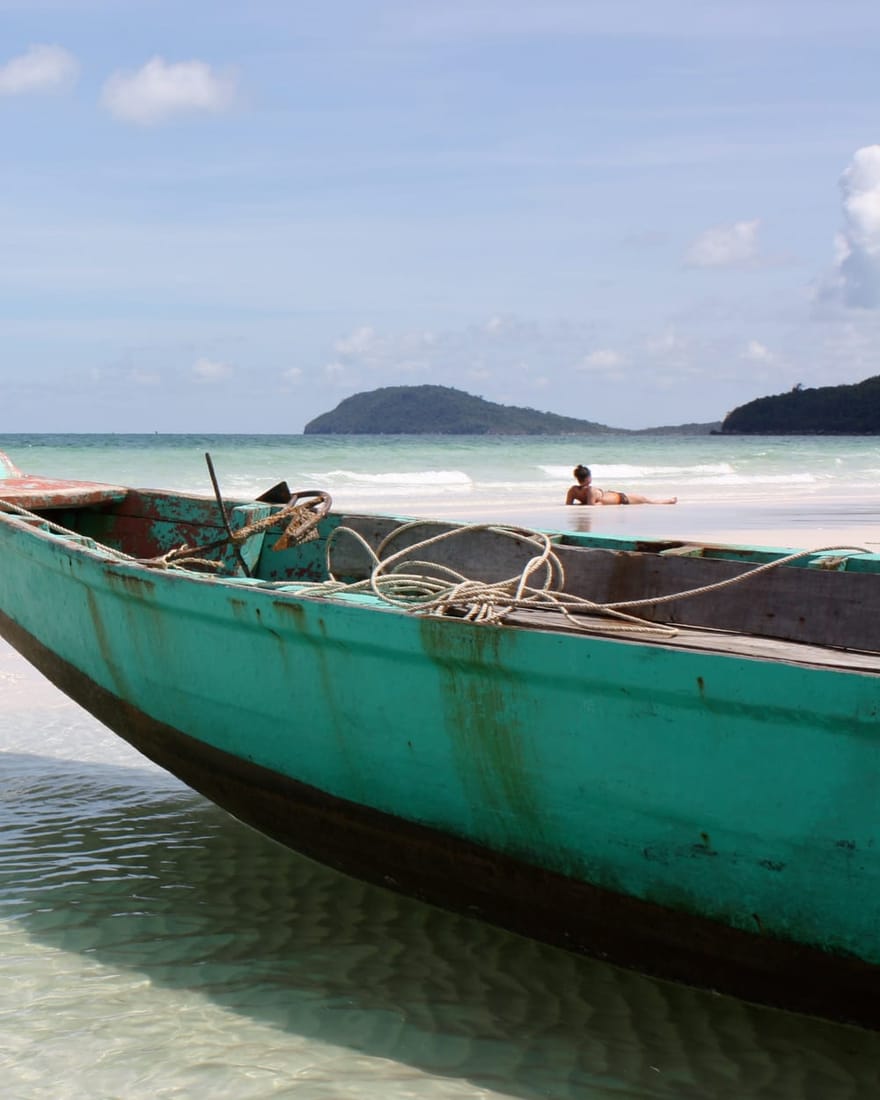
This is the trick most visitors don’t know. When the southwest monsoon makes Bãi Trường rough, the south-facing and east-facing beaches are sheltered and stay swimmable:
- Bãi Khem (south, near An Thới): tucked out of the southwest wind, this is often the calmest, clearest water on the island in July and August.
- Bãi Sao (south): the other sheltered favourite — white sand, gentle water on a rainy-season morning. We wrote about Bãi Sao in its own guide.
- Hàm Ninh (east coast): not a swimming beach, but the water is glassy and it’s a fine late-morning seafood stop. See Hàm Ninh fishing village.
So the move is simple: swim at Bãi Trường in the early morning while it’s calm, and on rougher days drive 30–40 minutes south to Bãi Khem or Bãi Sao, which barely notice the wind.
What is better in the rain
Some things on the island are only worth doing in these months.
- Streams and waterfalls. Suối Tranh and Suối Mơ run full from July to September. In the dry season they are little more than damp rock.
- The river. The Cửa Cạn river flows down from the hills, so rough seas do not touch it. Higher water makes the mangrove channels easier to paddle.
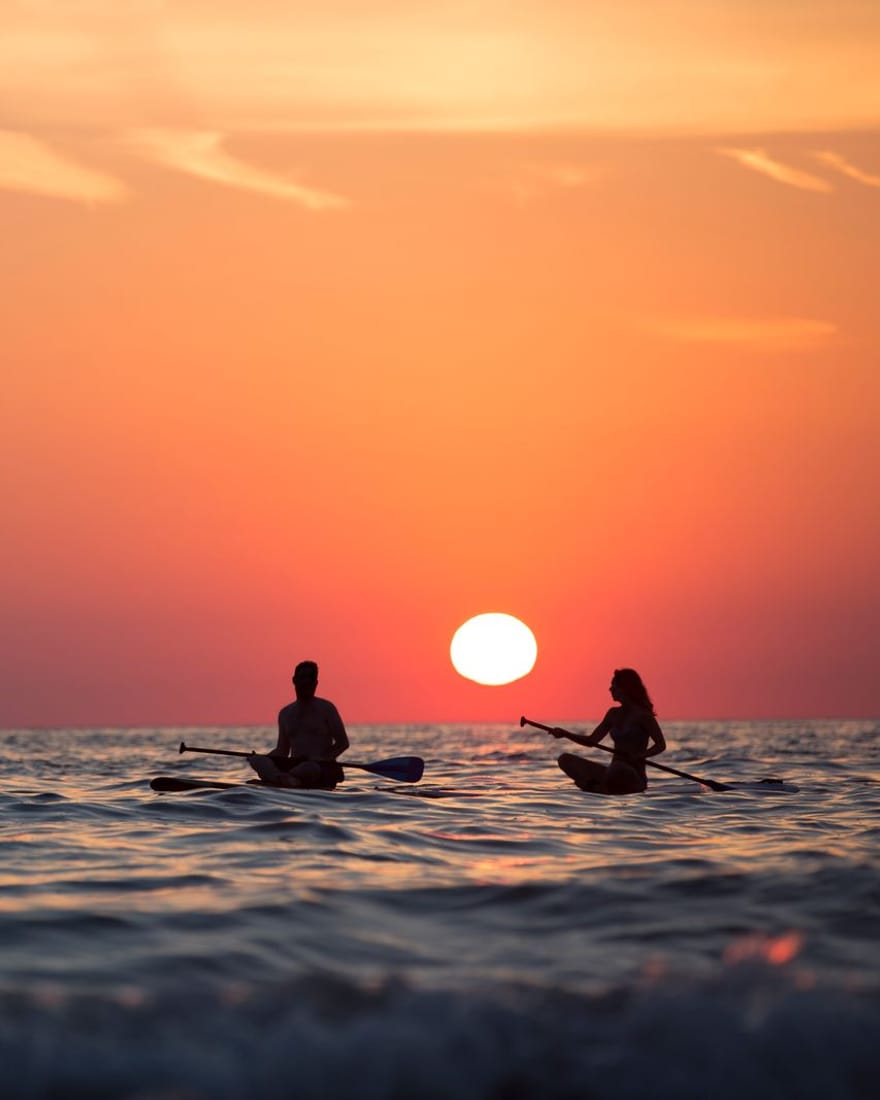
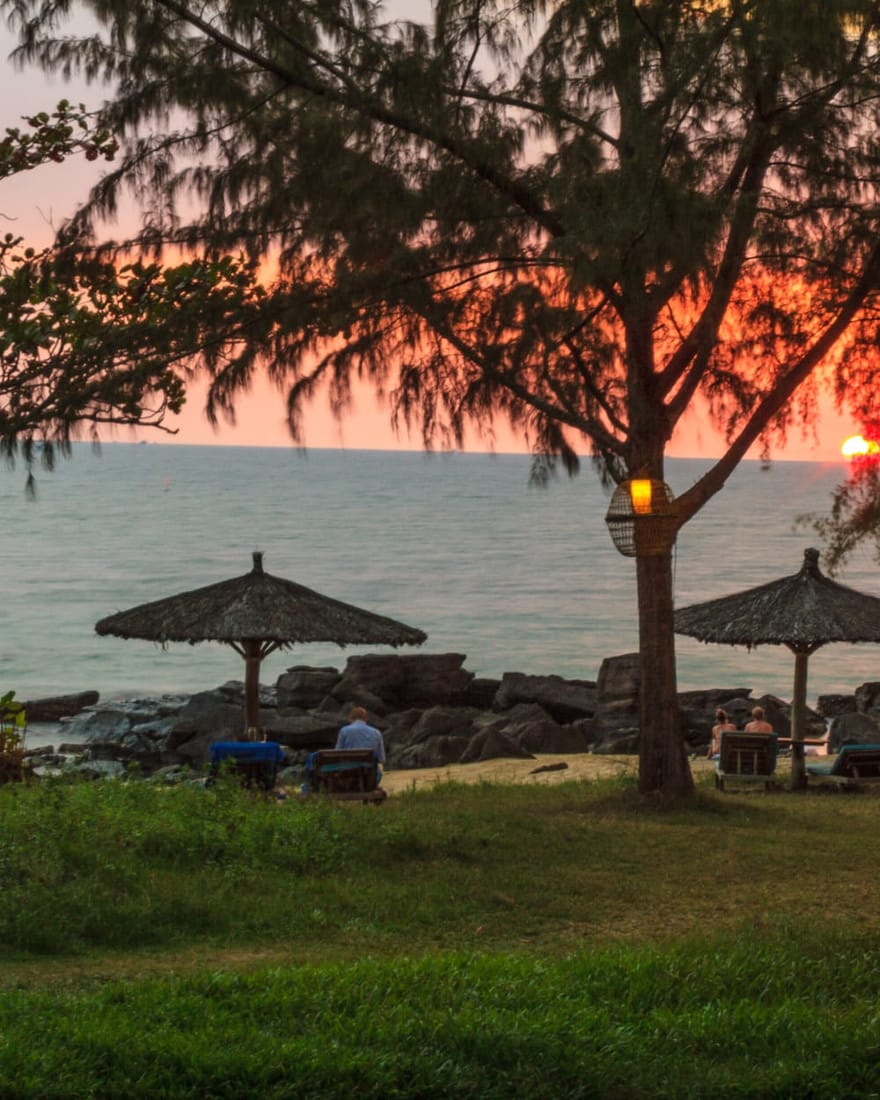
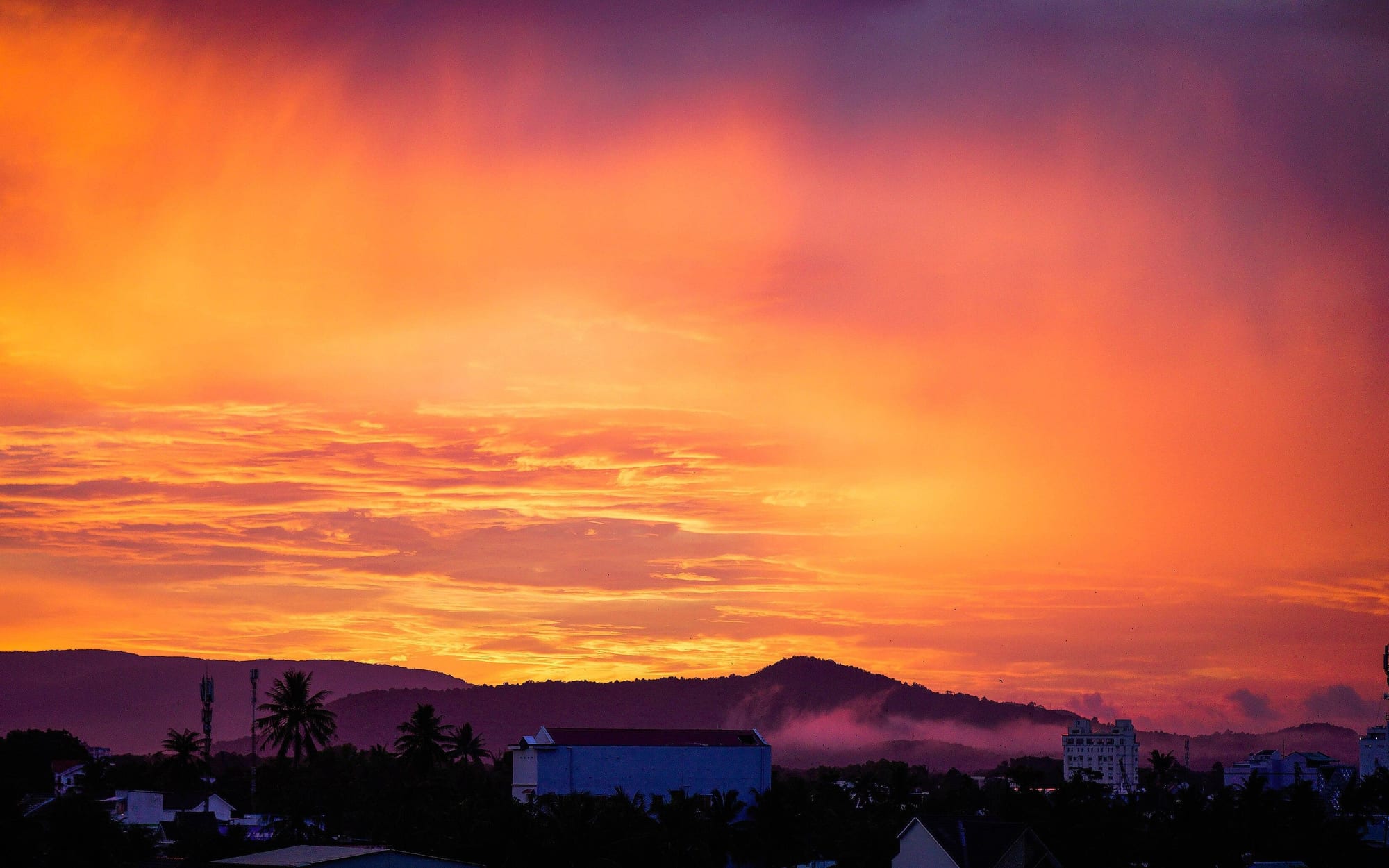
- Sunsets. A shower that clears by late afternoon leaves broken cloud behind, and broken cloud takes colour far better than an empty sky. See our sunset guide.
- Diving at An Thới. The southern islands sit in the lee of the main island, so the dive sites are often calm on days when Bãi Trường is not.
- Sea urchin. Nhum is on the table all year, and the places that serve it are easier to get into now.
Where to sit out a shower: cafés with a view
When the sky goes dark at four o’clock, you don’t want a museum — you want a chair, a coffee, and a window on the rain. A few we send guests to:
Right on Bãi Trường (5–10 min from Luna)
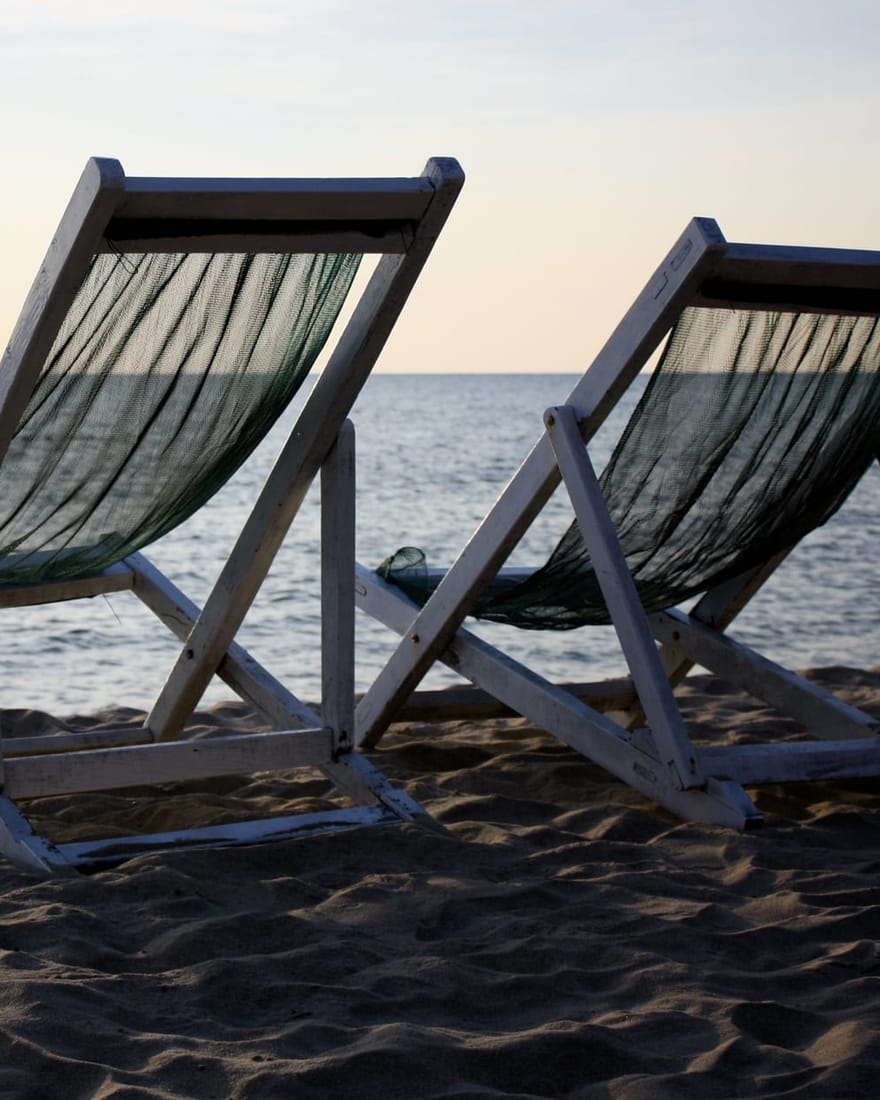
- The beachfront café strip along Bãi Trường has roofed terraces facing the sea — order a salt coffee (cà phê muối) and watch the rain hit the water. Most of them stay open through showers; the staff just roll down the side curtains.
- Sunset Sanato Beach Club has a covered indoor section and the rain over its sculptures is its own kind of view.
A drive south
- Sunset Town boardwalk cafés (25 km south): the Mediterranean-village staging looks better in wet weather than you’d expect — the colours saturate, the boardwalk empties. Most cafés along the central square are roofed. Our Sunset Town guide breaks down the full evening.
Inland under the trees
- Suối Tranh and Suối Đá Bàn waterfalls are at their best in the wet season — actual water coming down, the forest cool and dripping. A short trek, mostly under canopy. We wrote about Suối Tranh in its own piece.
Indoor attractions that don’t depend on weather
For a full rain day (rare but happens), there are a handful of indoor things that genuinely deliver:
- VinWonders Phú Quốc (north): the indoor theme-park sections are perfectly fine in rain. A long but dry day for families.
- The pearl-farm showrooms at Long Beach Pearl or Ngoc Hien — small museum + showroom + workshop demo. Free entry, twenty minutes of pearl-grading is more interesting than it sounds.
- A nước mắm fish-sauce factory tour in Dương Đông — most factories let you walk the aisles of wooden barrels for free. The smell is intense and very Phú Quốc.
- Phú Quốc Bee Farm (Khu Tượng): roofed tasting room, honey + propolis + sim wine to try. Easy 45 minutes.
- The Dương Đông night market is covered enough to enjoy in light rain, and it’s busiest and best from 5pm.
Getting around when it rains
- On a scooter. A shower makes the road slick for the first few minutes. Ease off, or pull in under a café awning and wait; it passes quickly. More in our scooter guide.
- By car. For an evening out, Grab is simpler than riding home in the wet. Book the return before you sit down to eat.
- On the water. Boats still go out, and they also cancel when the wind is up. Keep one flexible day in your plan so a cancelled trip can move.
- With a roof. Keep one or two indoor ideas in your pocket: a cooking class, a mud bath, a massage, or an hour at the Cội Nguồn Museum.
A slow afternoon at the hotel
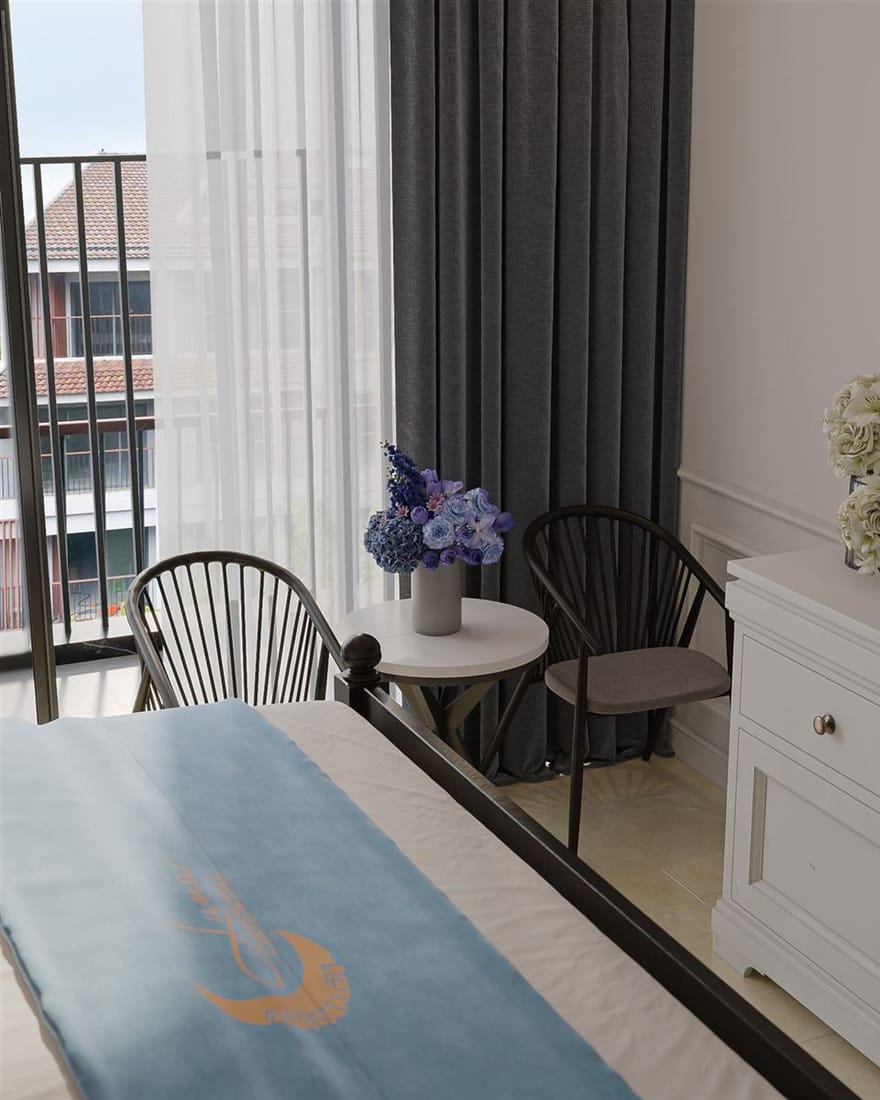
Honestly, some of the nicest rainy-season hours are spent on a balcony with the shower coming down and a coffee in hand. That’s a real part of the season, not a consolation prize.
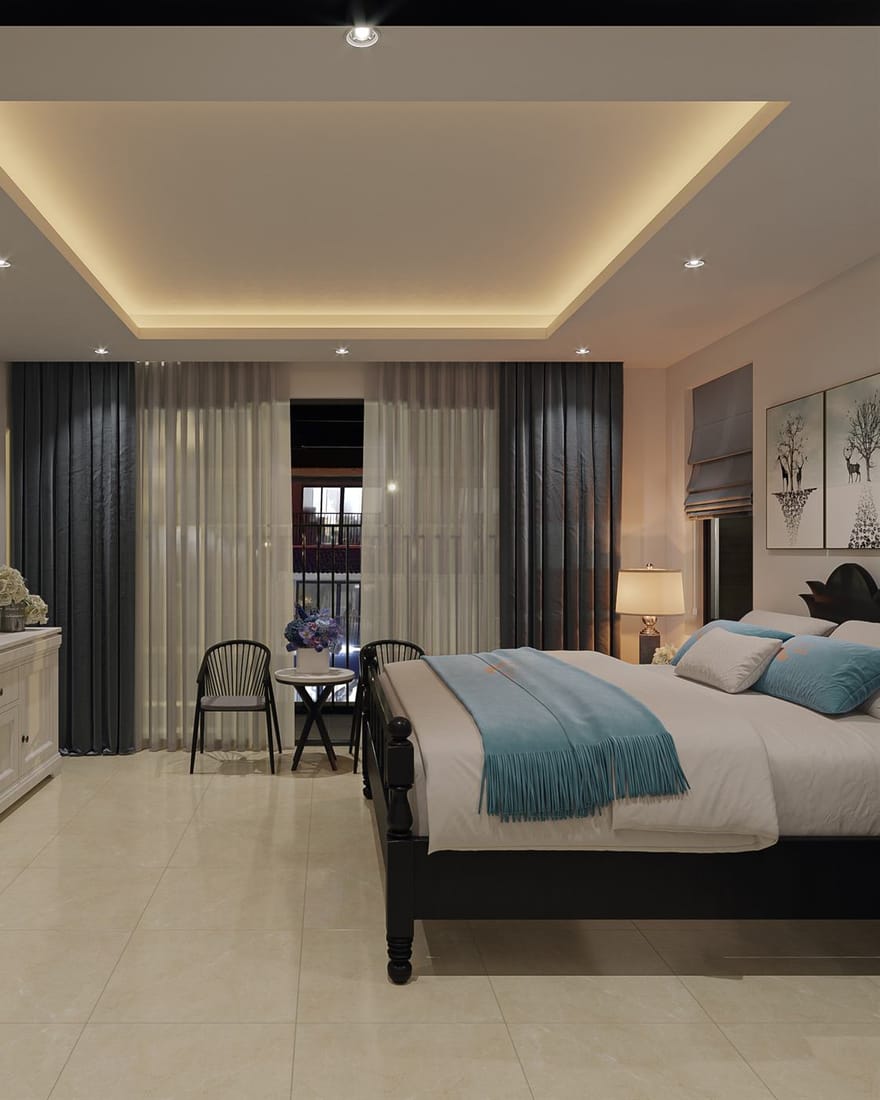
A small boutique suits this kind of weather better than a big property — fewer halls to cross, the staff knows when you came in wet, and the lobby is small enough to feel like a living room when it’s pouring outside. We keep a kettle hot at reception in the afternoons. If you’re staying with Luna, ask Tâm for a cup of lemongrass tea when you come in from a wet walk.
Why the wet season is the smart time to book
Here’s the part that wins people over. July through September is the deepest off-season, which means:
- Rooms cost the least all year — often half the December rate for the same night.
- The beach is quiet. Bãi Trường in low season is wide and empty in the mornings, the way it used to be year-round.
- The island is at its greenest. The forest fills in, the waterfalls run, and the light after rain is some of the best for photos.
If you’re watching the budget, book direct with a small hotel rather than through an OTA — no middleman in between, and it’s easier to move a date if a storm is forecast. Luna Oriental is 18 rooms inside Sonasea at SS27, Bãi Trường, five minutes’ walk from the sand. See our rooms or send us a note via contact and we’ll keep an eye on the forecast for your dates.
Written from Bãi Trường, where Phú Quốc now sits in An Giang province after the 2025 merger.

Frequently asked questions
Does it rain all day in Phú Quốc in July?
No. The usual pattern is a bright morning and a short heavy shower in the late afternoon or at night. Whole washed-out days happen but they're the exception, not the rule. Plan beach + outdoors for the morning, indoor for late afternoon.
Can you still swim in Phú Quốc in the rainy season?
Yes. Swim at Bãi Trường in the calm early mornings; on windy days head 30–40 minutes south to Bãi Khem or Bãi Sao, which are sheltered from the southwest monsoon and stay swimmable all season.
Is Phú Quốc cheaper in the rainy season?
Considerably. July–September room rates are often half the December peak. The beach is quiet, the forest is at its greenest, and our direct rate is never higher than the OTAs.
Where can I sit out a rain shower with a sea view?
Bãi Trường has a string of beachfront cafés and the covered Sunset Sanato area; the boardwalk at Sunset Town has open-air bars with roofs. Inland, the Phú Quốc bee farm and the pearl-farm showrooms are dry afternoons. We list specifics in this guide.
What should I pack for Phú Quốc in the rainy season?
A light packable rain jacket, sandals that don't mind getting wet, a dry bag for the phone, and one long-sleeve layer for over-air-conditioned cafés. Reef-safe sunscreen for the bright mornings.