
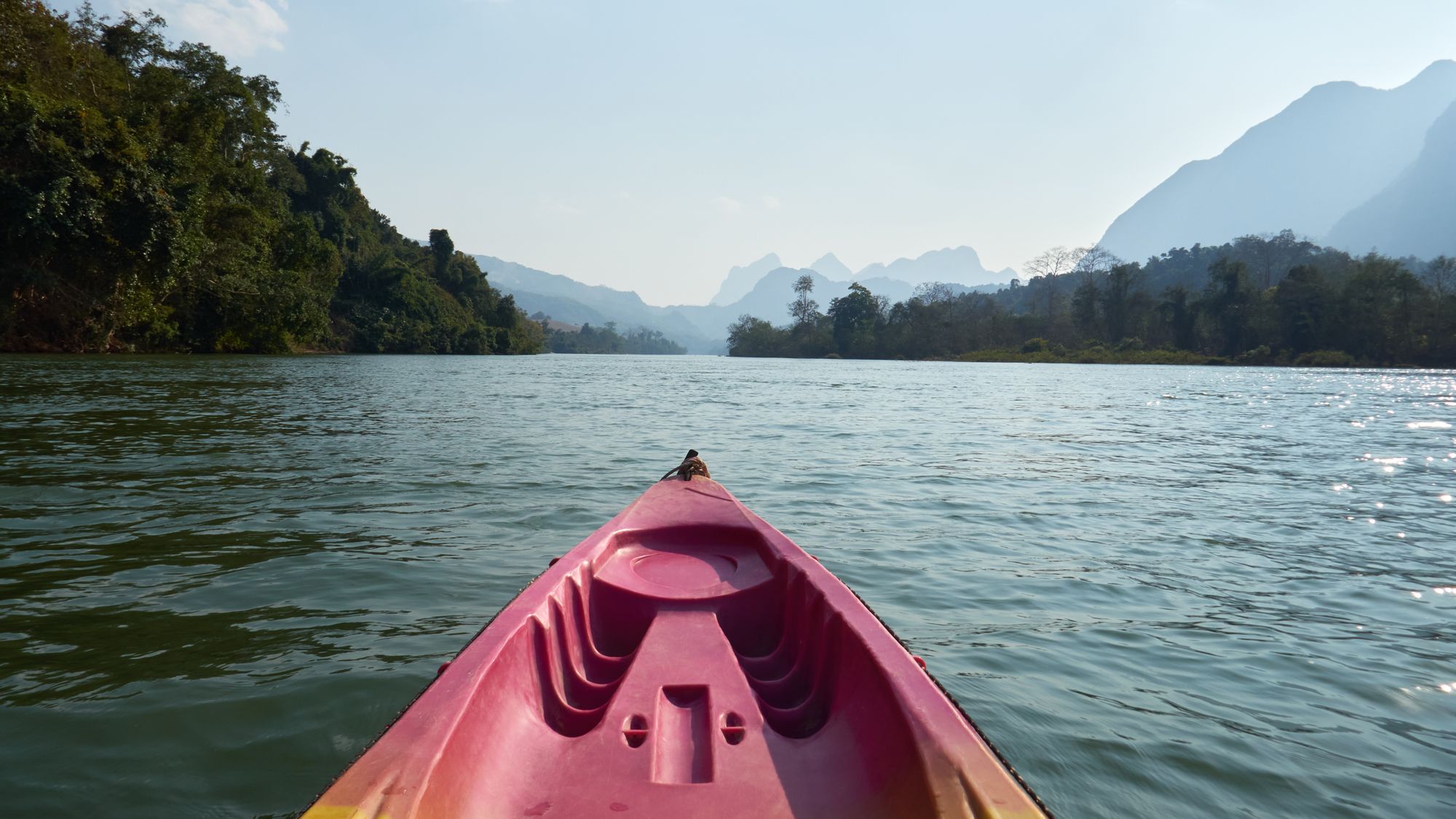
Paddle through nipa palm and mangrove on Cửa Cạn river — Phú Quốc's most peaceful kayak route, 30 km from Luna on Bãi Trường. Plan your morning trip.
Cửa Cạn river Phú Quốc: kayaking the island's quietest route
The typical Phú Quốc day trip goes south — cable car to Hòn Thơm, snorkeling around An Thới, the floating village. But Cửa Cạn river runs in the opposite direction: inland and north, under a canopy of nipa palms and mangroves, past a small fishing village that has been here long before any hotel on the island. The river stretches more than 20 km through the northwest before opening to a quiet beach on the Gulf of Thailand. Most visitors never find it. The kayak route is calm enough for anyone, works well in the rainy months when the coast is rough, and the guests who make the trip come back with damp sleeves and a particular quietness about them.
Where Cửa Cạn river is
Cửa Cạn is both a river and a small commune in the northwest of Phú Quốc, about 6 km north of Dương Đông town. From Luna at SS27 Sonasea on Bãi Trường, it’s roughly 30 km by road: drive north along the coast into Dương Đông (15 km), continue through the town centre toward Gành Dầu, and the turning for Cửa Cạn commune appears before the cape. Total drive is 40 to 50 minutes depending on how busy the Dương Đông market stretch is.
The river starts in the Hàm Ninh hills and flows through four communes — Cửa Cạn, Cửa Dương, Bãi Thơm, Gành Dầu — before emptying into the sea. The section most kayak operators use runs the lower 5 to 8 km: wide enough for paddlers to spread out, shaded by dừa nước (nipa palm) and đước (mangrove), with a gentle current that lets you drift between strokes.
What the Cửa Cạn kayak route is like
Most organized tours run a half-day: departure from the river landing at Cửa Cạn village, two to three hours on the water, and return before noon. The pre-paddle briefing is short — flat-water kayaking on a calm river needs no special skill. Life jackets are included.
On the water, the banks feel immediate. The nipa palms lean in from both sides; at some bends the fronds nearly touch overhead and you’re paddling through a green corridor. White herons lift from the bank as you approach, then settle again a hundred metres ahead. You’ll hear the sharp call of a kingfisher before you see it. Wooden fishing boats are tied along the edges, nets strung between the trees to dry.
The quiet is the main thing. There’s no motor noise, no announcement system. Just the dip of paddles, water under the hull, and whatever comes around the next bend.
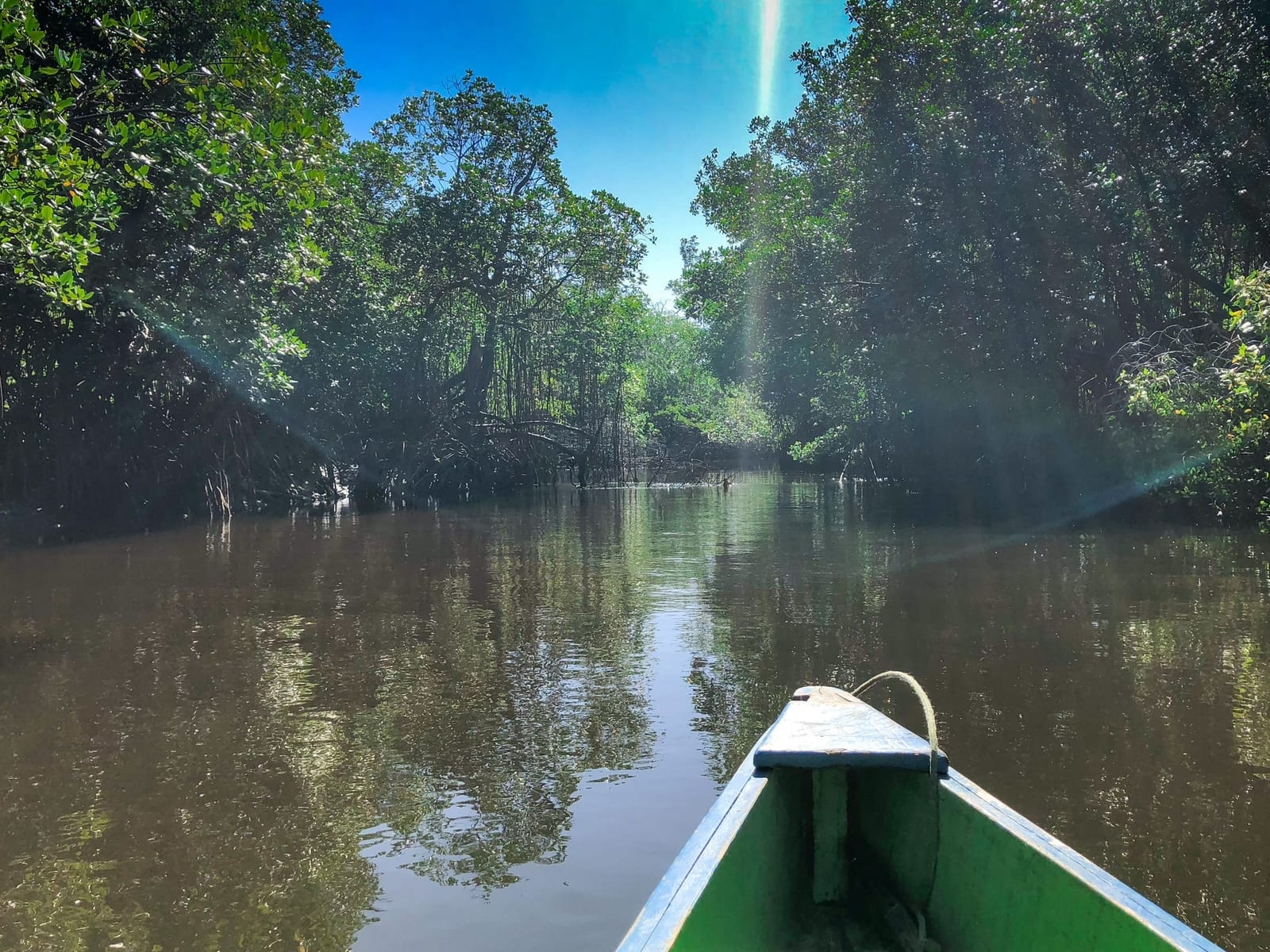
The lower river — nipa palm and mangrove pressing in from both sides, water calm enough to hear your own paddle.
At the river mouth, tours typically stop at Cửa Cạn beach: a short, quiet crescent of sand open to the Gulf of Thailand, almost always empty of tourists. The water is shallow and clear — worth a wade before the drive back. A few simple seafood stalls operate near the landing if you want lunch before returning.
Booking a kayak tour and what to bring
Luna’s tour desk can arrange a half-day Cửa Cạn kayak trip — ask at reception the evening before and we’ll confirm a slot and organize a car. Several local operators also run tours independently from Cửa Cạn village; if you prefer to go on your own, hiring a motorbike from the hotel gets you there in under an hour. At the village landing, local guides take small groups directly onto the water. Confirm what’s included before agreeing: life jacket, paddle, guide, and return transport are the essentials.
What to bring:
- Light clothes you don’t mind getting damp — the paddle splashes, and the humidity is constant.
- Closed shoes or water sandals — the river bank can be muddy at low tide.
- Sunscreen — the tree canopy gives shade in patches, but midday sun finds the gaps.
- A dry bag for your phone — the river is calm, but no reason to risk it.
- Water — tours usually include a rest stop but carry your own for the paddle.
Leave by 8am if you can. The river feels cooler in the morning, the birds are more active, and you’ll be back in time for lunch before the afternoon rain comes in.
Why June through October is a good time to go
The dry season (November to April) is when Cửa Cạn river runs clearest and the beach at the mouth is at its calmest. But the kayak route works through the rainy season too — and from June to October it has its own appeal.
The vegetation is at its fullest: the nipa palms are a deeper green, the mangrove canopy is denser. Higher water levels bring the trees even closer overhead, making the enclosed corridor effect more pronounced. And the number of other visitors on the water drops considerably compared to peak season.
If you’re visiting Phú Quốc in the green season and wondering what to do on a choppy sea day, this is the answer we reach for first. We’ve also written up how the rainy season actually feels on the island — shorter version: quieter, greener, and more relaxed than most people expect. Another north-island morning that runs well in these months is Suối Tranh waterfall, 25 km north of us and at its best when the flow is up. Continue a little further northwest from the river mouth and you reach Bãi Dài, the long undeveloped beach backing onto the national park — an easy second stop on the same drive.
A quiet room to come back to
The river leaves you in a particular kind of calm. Luna Oriental has 18 rooms at SS27 Sonasea on Bãi Trường — two minutes from the beach and about 40 minutes from Cửa Cạn on the way home. See our rooms or ask at reception about arranging the trip.
Photos: hero — Mykhailo Petrushchak on Pexels; in-body — Thiago Japyassu on Pexels.
Frequently asked questions
Is kayaking on Cửa Cạn river suitable for beginners?
Yes — the river is calm, wide, and shallow, with a very slight downstream current. Most operators give a short paddle briefing before departure and provide life jackets. No prior experience is needed; the hardest part is not stopping every few minutes to watch the birds.
How far is Cửa Cạn from Luna Oriental?
About 30 km north — roughly 40 to 50 minutes by car from SS27 Sonasea on Bãi Trường. Drive north through Dương Đông, continue past the town centre toward Gành Dầu, and the Cửa Cạn turning comes before the cape.
Can you kayak Cửa Cạn in the rainy season (May to October)?
Yes, and in some ways the rainy months are better. The river flows from inland hills, so rough sea conditions don't affect it. The vegetation is at its densest, the water level is higher — which makes the mangrove canopy feel closer — and morning weather is almost always clear. Go before noon to beat the afternoon rain.