
Local delicacy · Gành Dầu & An Thới · south island
Nhum biển Phú Quốc: where to eat sea urchin and what to order
Most guests who ask what to eat in Phú Quốc get the same shortlist: bún quậy for breakfast, gỏi cá trích in the afternoon, grilled seafood at night. Nhum biển rarely makes it onto that list — and that’s a shame, because it’s one of the most distinctly local things you can eat on the island. It doesn’t travel well, it’s caught close to shore, and you’ll almost never find the same quality anywhere else in Vietnam.
Here’s what nhum biển is, where to find it, and how to order it well.
What nhum biển actually is
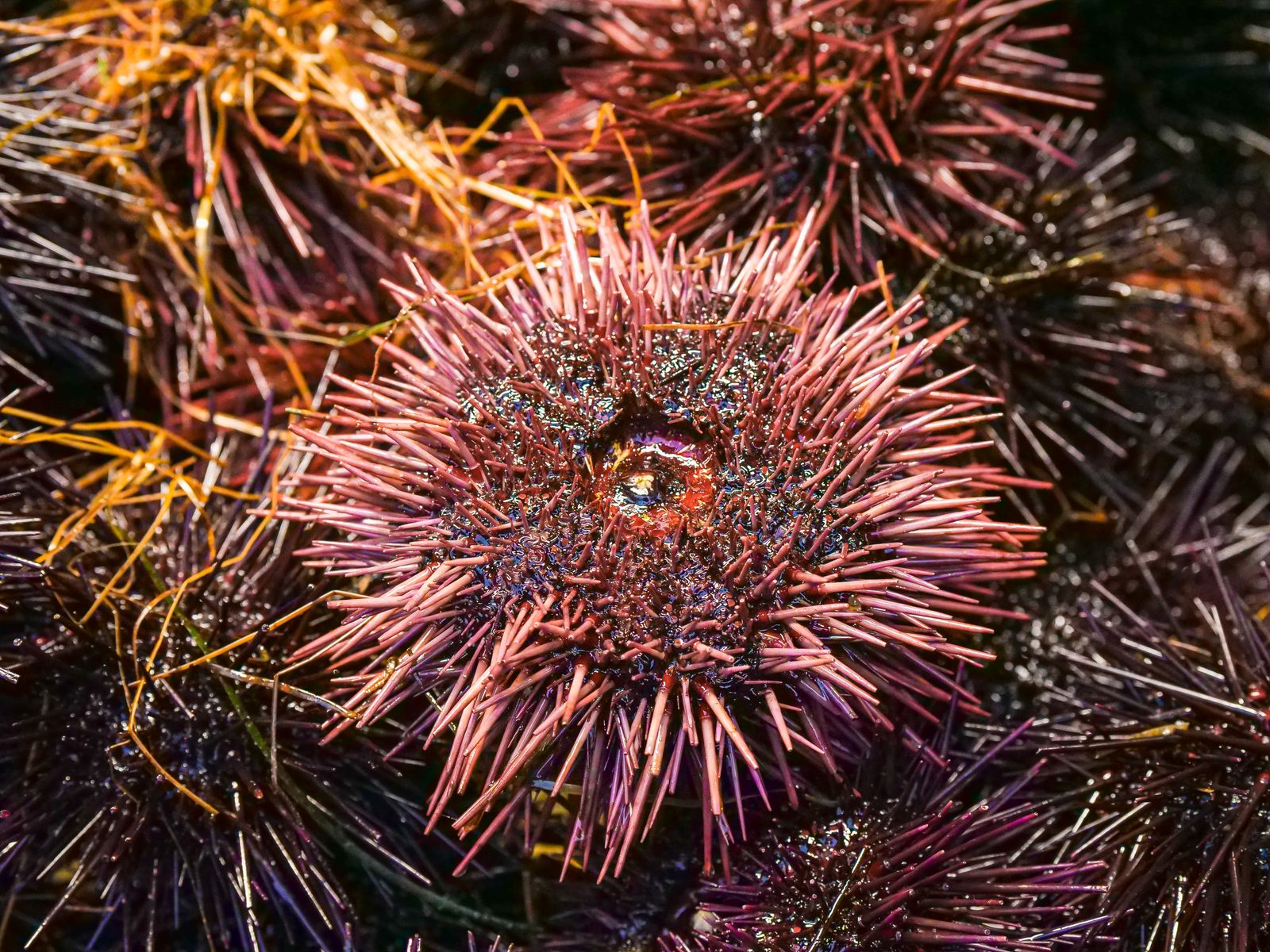
Nhum biển is sea urchin — the spiny, round creature that clings to rocks along Phú Quốc’s southern reefs. The part you eat is the roe: five small tongues of golden-orange flesh sitting inside the shell. The taste is clean and oceanic, with a natural sweetness that catches most people off guard the first time. Once the shell is cracked open, it goes stale quickly — this is genuinely a same-day food.
The Vietnamese name comes from the creature’s look: “nhum” or “cầu gai” refers to the spiny exterior, the same word used across the south. At most serious seafood spots you’ll find nhum displayed still alive in shallow water or wet bags — that’s the sign worth looking for before you sit down.
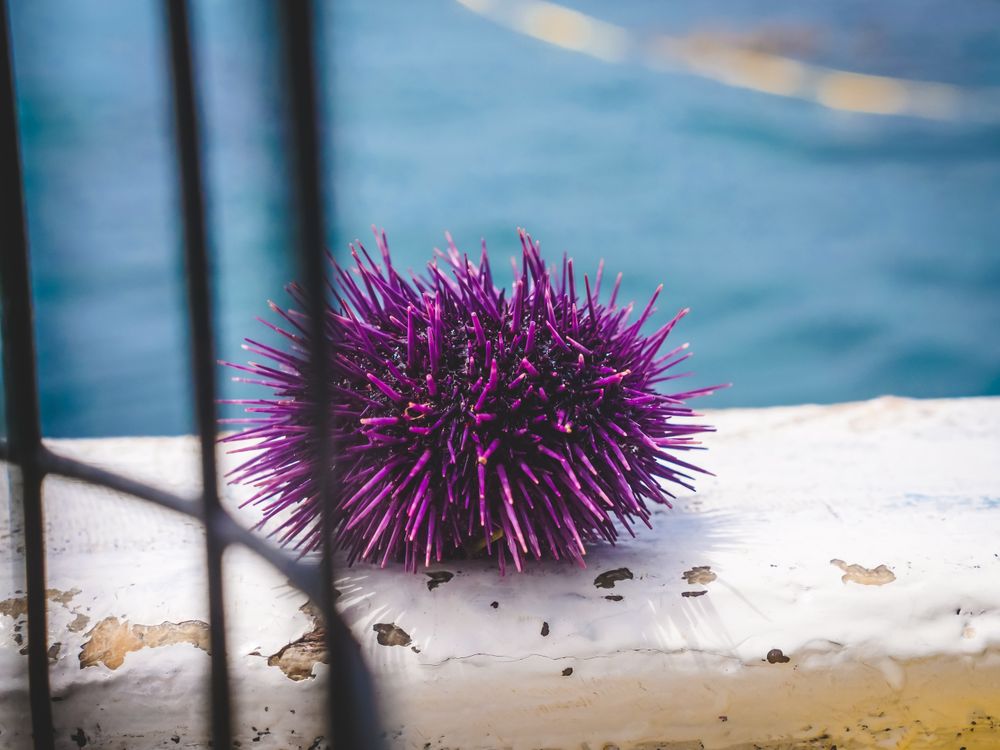
The roe is inside — five tongues of pale orange flesh. The spines are what most people photograph; the taste is what they remember.
Where to find nhum biển in Phú Quốc
The most reliable areas are Gành Dầu in the far north and the fishing settlements around An Thới in the south. Both are working fishing areas where nhum is landed fresh daily. The restaurants here are simple — plastic chairs, ice buckets, a chalkboard menu — and that simplicity is the point. There’s no reason to dress it up when the ingredient is this good.
If you’re joining an island snorkeling trip out of An Thới, your guide will often pull up alongside a fishing raft partway through where nhum is sold live. You crack it open on the boat, eat the roe with a small spoon while the water moves under you, and that’s the whole experience. It sounds like a tourist stop but it isn’t — it’s how the fishermen sell them.
Some spots along the Bãi Trường strip do offer nhum, but the further you get from the fishing grounds, the more it shows in the quality. If nhum is the reason you’re going out, go to where it comes from.
How to order: the preparations worth knowing
The standard is nhum nướng mỡ hành — grilled sea urchin with scallion oil. The shell goes over charcoal, a generous spoonful of scallion oil is ladled on as the heat comes up, and you eat straight from the shell with a small spoon. The warmth firms the roe just slightly while the scallion oil cuts through the richness. It’s the version most locals steer first-timers toward, and it’s the right call.
Nhum sốt bơ tỏi — sea urchin with garlic butter sauce — is the richer alternative. Good if you’re sharing a spread of several dishes and want something that pairs with rice.
Nhum tái chanh (marinated briefly in lime juice) is the most delicate and the most honest version of the flavour. It’s also the one most affected by time — only order it if the nhum was clearly alive a few minutes ago and the spot is busy enough that nothing sits around. At the right place, it’s the best of the three.
One practical note: one or two per person as part of a meal is the right amount. Nhum is not a filling dish — it’s something to appreciate slowly, more like an oyster than a main course.
When to go and what to know beforehand
Nhum biển is available year-round, but the wet season (May–October) is particularly good. The southern reefs are calm in the mornings before the afternoon showers arrive, which means the boats get out easily and the catch that day is reliable. Off-season also means empty tables — you won’t be competing for the last few shells.
Go in the morning. Most fresh seafood spots at Gành Dầu open early and the best stock is gone well before midday. Arriving before eleven gives you the pick of the day’s catch.
One more thing: bring small bills. The fishing-area spots rarely have change for a 200k or 500k note. And if you’re renting a scooter to get to Gành Dầu, the road through the pepper farms and rubber trees is worth the drive on its own.
Getting there from Bãi Trường
Luna Oriental sits at SS27 Sonasea, Bãi Trường — about 25 km south of Gành Dầu and roughly 12 km north of An Thới. Both are doable in a day. The southern route through An Thới pairs naturally with a morning on the island snorkeling boats; the Gành Dầu run makes a better standalone half-day, ideally by scooter.
Grab is reliable along the coast to Dương Đông but thin past An Thới toward the north. If you’re heading to Gành Dầu, a rented scooter is the practical choice — ask at check-in and we’ll sort it out.
Nhum biển doesn’t show up on most food lists about Phú Quốc. That’s part of why it’s worth going out of your way for.
Photos: Kindel Media on Pexels.
Frequently asked questions
Is nhum biển safe to eat in Phú Quốc?
Yes, at busy spots near the fishing grounds where turnover is high and the catch is same-day. Gành Dầu and An Thới are the most reliable areas. Avoid places where the nhum looks like it has been sitting in a tank for a while — it should be visibly alive.
When is the best time to eat nhum biển in Phú Quốc?
Nhum biển is available year-round, but the wet season (May–October) suits it well. Calmer southern reefs mean a consistent daily catch, crowds are thin, and the spots that serve it are easier to get a table at.
How much does nhum biển cost in Phú Quốc?
Roughly 50,000–150,000 VND per sea urchin depending on size and preparation. Grilled with scallion oil tends to cost slightly more than raw. Prices at Gành Dầu fishing spots are lower than at restaurants in town.