
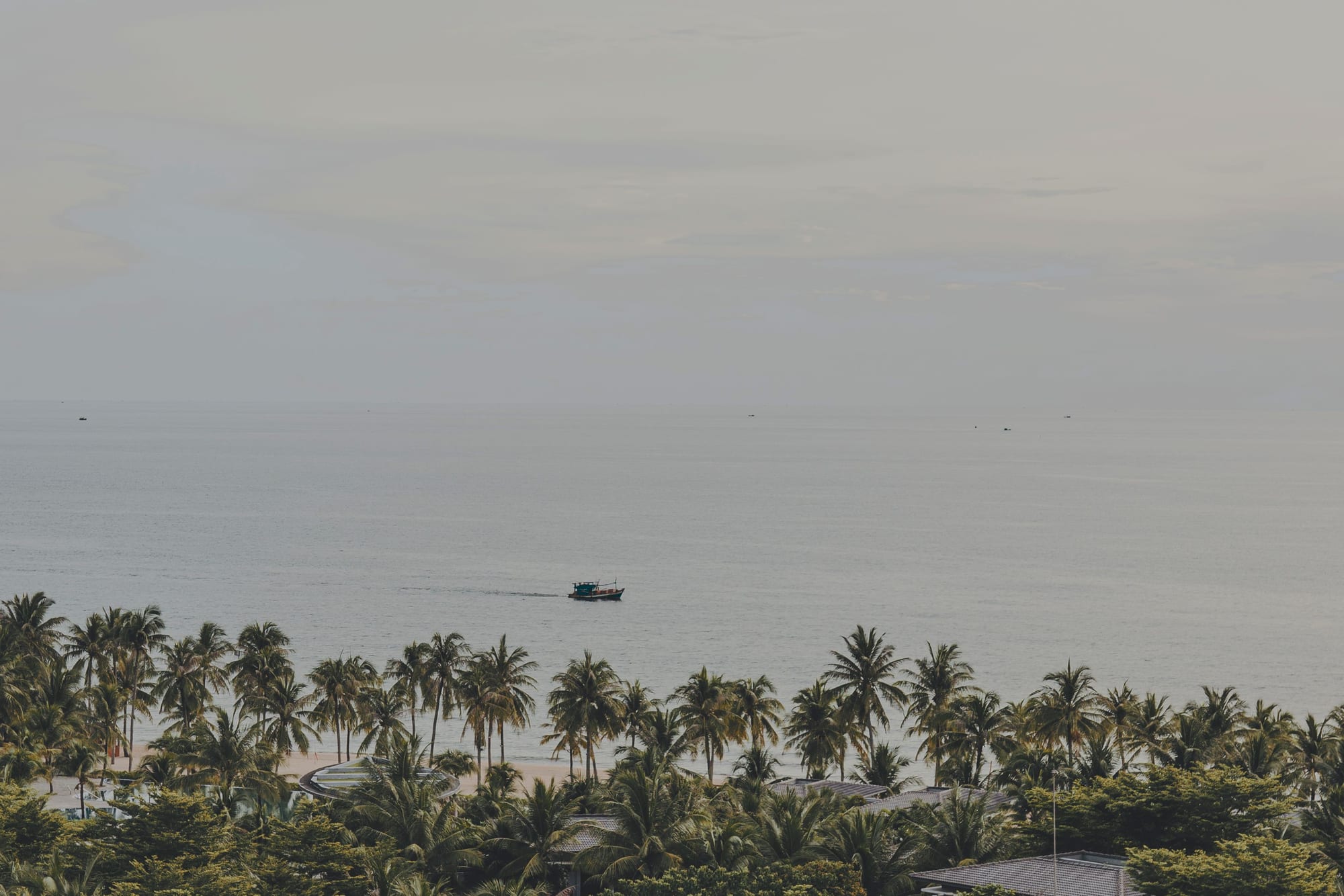
Bãi Dài Phú Quốc — 15 km of wild, palm-lined coast on the northwest shore, still quiet and undeveloped. How to get there and what to bring.
Bãi Dài Phú Quốc: the long beach the crowds haven't found yet
Most visitors to Phú Quốc spend their beach time on the west coast — Bãi Trường, the long strip south of Dương Đông, or the sheltered southern beaches like Bãi Sao and Bãi Khem. Bãi Dài Phú Quốc is a different story. It runs along the northwest shore for roughly 15 kilometres — backed by the edge of the national park, facing the open gulf, and visited by a fraction of the people who end up on the more accessible beaches.
The name literally means “Long Beach.” It earned it.
What makes Bãi Dài different from Bãi Trường
Bãi Trường has become Phú Quốc’s main beach strip — hotels and guesthouses running its length, restaurants behind the shoreline, easy access from town. It’s what most guests mean when they say “the beach.”
Bãi Dài is what Bãi Trường used to look like before the building started. The forest comes right down to the sand in places, coconut palms grow close to the waterline, and the shore stretches so far in both directions you can walk for twenty minutes without seeing the end of it. The Vinpearl complex occupies the northern section, but the central and southern public stretches remain quiet and largely undeveloped.
The water here is the same clear-turquoise shade as the rest of the island’s west coast — slightly rougher than Bãi Sao or Bãi Khem because Bãi Dài faces the open northwest, but perfectly swimmable from November to April.
Getting to Bãi Dài from Bãi Trường
The drive takes about an hour by scooter or car — north through the centre of Dương Đông, then northwest on the island road toward Cửa Cạn and beyond. The road is sealed for the entire distance but narrows in the last stretch before the beach. On a motorbike, the section through the national park — tall trees on both sides, almost no other traffic — is one of the better rides on the island.
By car: more comfortable for a group, but the narrow forest roads near the access points can be tricky. A driver arranged through Luna’s tour desk can drop you and pick you up at a set time, which is simpler than waiting for Grab in a place with poor phone signal.
Parking: small lots near the main public access points. Scooters are easy; four-wheel vehicles have less room to turn around.
What to expect on arrival
The main thing to understand: Bãi Dài has minimal facilities. Unlike Bãi Trường with its restaurant strip and rental chairs, the public sections of Bãi Dài may have a lone coconut seller and not much else. Bring everything you need for the day.
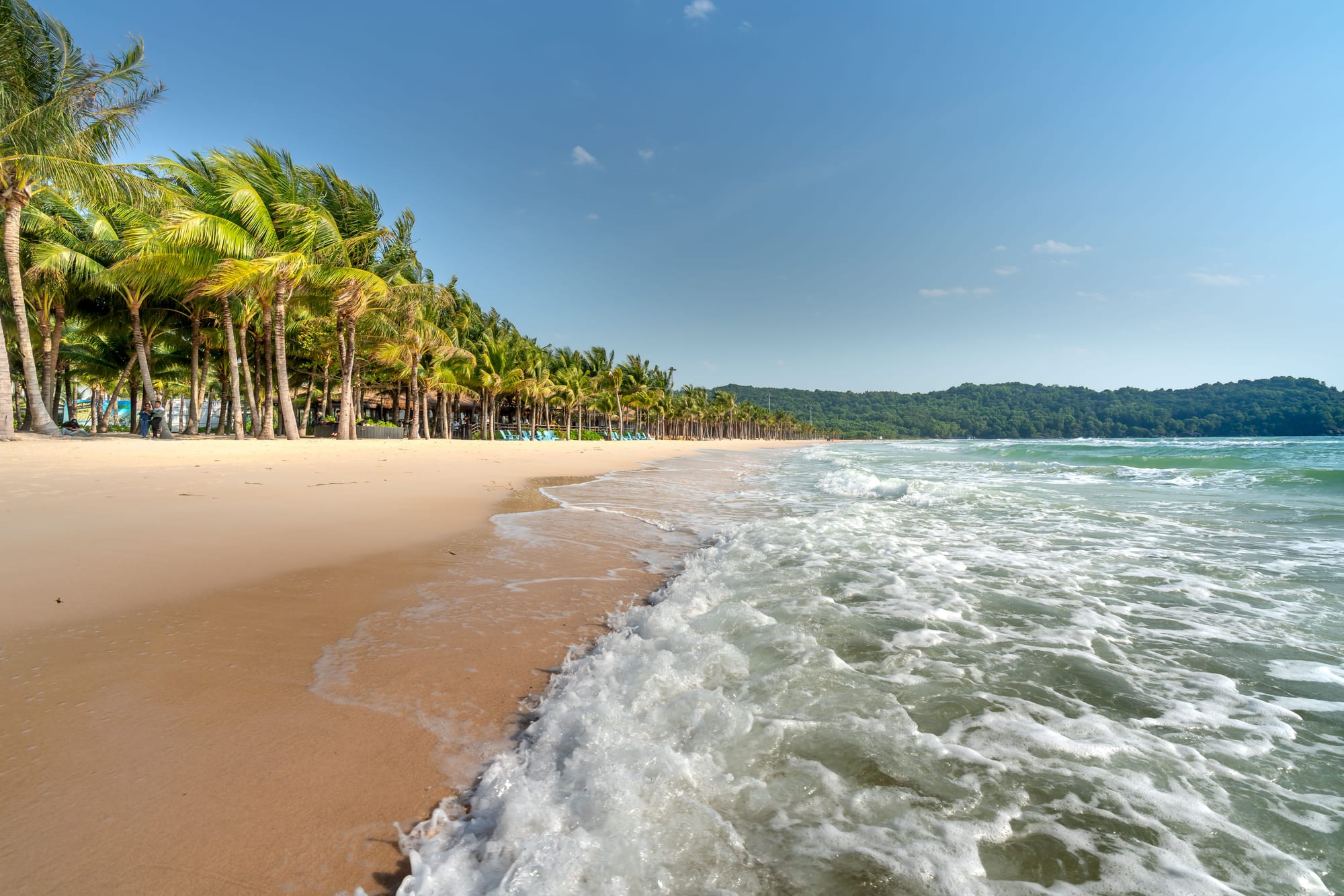
The palm-backed shore of Bãi Dài — no umbrellas for hire, no restaurant behind you.
What you get in exchange is space and quiet. On a weekday in low season, you may have a stretch of sand almost entirely to yourself. The water is clear, the sand is pale, and the line where the national park forest meets the beach is visible from where you stand.
Swimming: the surf is slightly stronger here than on the south beaches — check conditions before you wade in, particularly during the wet season (May–October) when the northwest swell picks up.
When to go
November to April is the right window. The northwest coast is sheltered during the northeast monsoon season, which means calmer water and cleaner skies. Bãi Dài faces slightly more swell than Bãi Sao, but it’s swimmable and the light in the morning is clear and sharp.
May to October: the southwest monsoon comes directly at the northwest coast. Bãi Dài gets choppier than the southern sheltered beaches during this period. Worth checking surf conditions the morning of. The beach is still stunning even on a rough day — the forest backdrop and the dramatic skies of the wet season make for good photography even if you don’t swim.
Combining Bãi Dài with the north island
The drive up to Bãi Dài goes past or near several other north-island stops worth adding to a full-day circuit:
- Cửa Cạn — the mangrove river mouth before you reach Bãi Dài, great for a kayak or a slow paddle at low tide. We wrote a guide to Cửa Cạn kayaking.
- Phú Quốc National Park — the road through the park is part of the Bãi Dài drive. Stop at any trailhead for a short forest walk; the birdlife is best in the early morning. See our guide to Phu Quoc National Park.
- Gành Dầu cape — the northwestern tip, with a view across to Cambodia on a clear day. A fishing village and some local seafood stalls at the cape itself.
A full loop: leave Luna by eight, stop at Cửa Cạn for a paddle, reach Bãi Dài for late morning, swim and picnic, then continue to Gành Dầu and back south through Dương Đông for dinner. Back by early evening.
Luna Oriental is at SS27 Sonasea, Bãi Trường, Phú Quốc, An Giang — the southern base for a Bãi Dài day trip. Ask at check-in and we’ll mark the best access roads on a map for you.
Photos: hero — Van Trang Ho on Pexels; in-body — Quang Nguyen Vinh on Pexels.
Frequently asked questions
How far is Bãi Dài from Bãi Trường?
About an hour by scooter — you ride north through Dương Đông, then continue northwest on the island road. It's roughly 45 km from Sonasea. A rental car or Grab is more comfortable for a group. The road is sealed all the way but gets narrower toward the northern access points.
Is Bãi Dài beach free and open to the public?
The public sections south of the Vinpearl complex are free and open. The Vinpearl northern stretch is private. Most visitors head to the central and southern access points, which have small parking areas and may have a local stall or two selling coconuts.
What should I bring to Bãi Dài?
Food and water — facilities are minimal and may not be there when you arrive. Reef-safe sunscreen, a beach mat or towel, cash for any local stall. If you swim, be aware the surf can be stronger than the sheltered south-end beaches, especially in the wet season.
Can I visit Bãi Dài in the rainy season?
You can, but the southwest monsoon hits the northwest coast directly from May to October — which means Bãi Dài gets choppier water and more surf than the south beaches during this time. The beach is still beautiful, but swimming conditions vary. Check the morning before you go.