

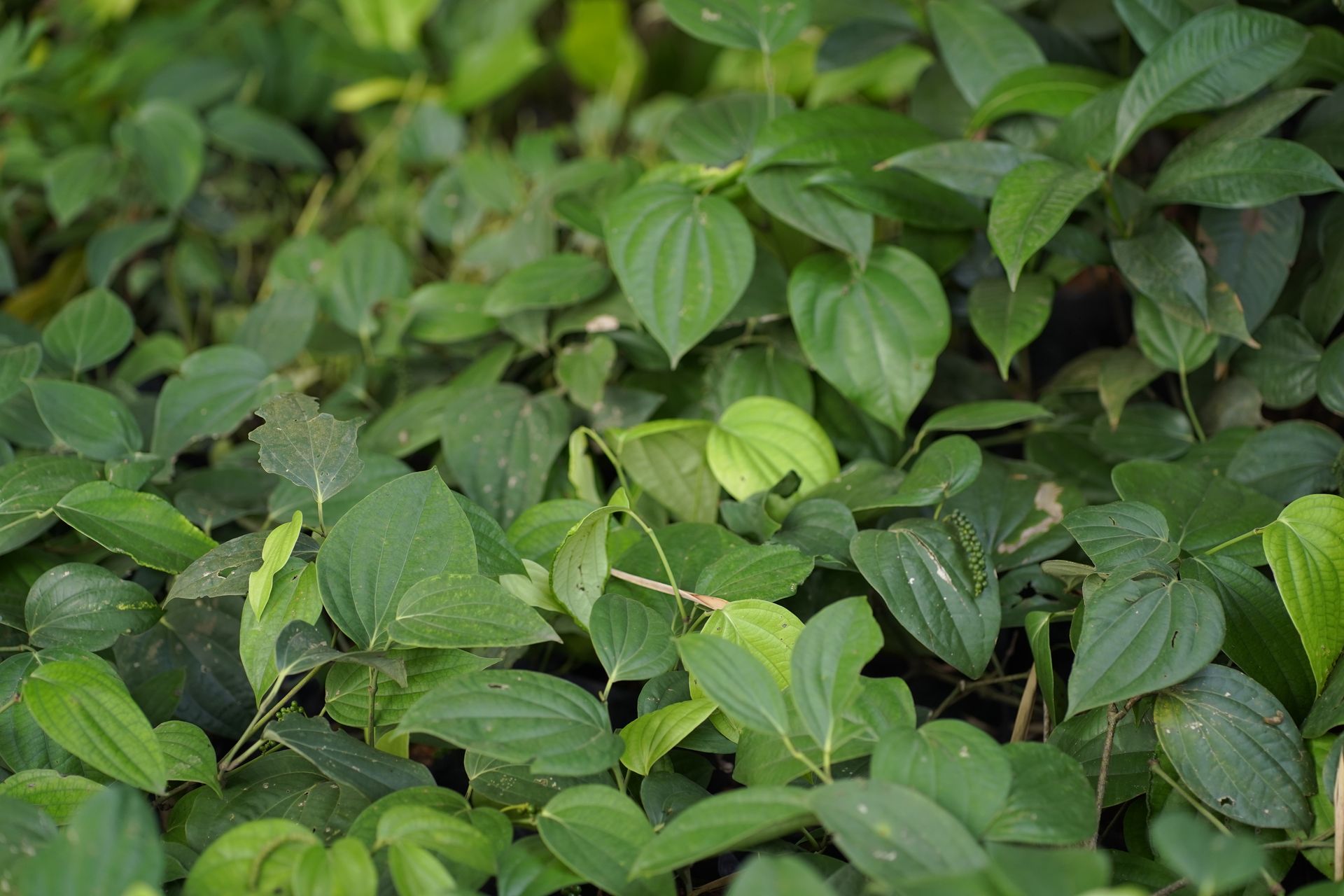
Visit a Phu Quoc pepper farm and taste fresh peppercorns off the vine. Guide to the best farms, harvest season, and the drive from Bãi Trường.
Phu Quoc Pepper Farms: What to See, When to Go & Best Farms
Phú Quốc has two products that the rest of Vietnam takes seriously: fish sauce and pepper. The fish sauce gets the bigger reputation, but the pepper is what the farmers are prouder of. Phu Quoc pepper grows in the island’s reddish tropical soil, on rough-barked stakes driven into the earth, the vines climbing three metres or more by the time they’re mature. The taste is sharper and more fragrant than most pepper you’ve encountered elsewhere — the kind of difference you notice immediately when you bite into a fresh berry straight off the vine.
Visiting a Phu Quoc pepper farm takes half a morning and costs almost nothing. It’s one of those stops that guests often say, at the end of the stay, they wish they’d done on day one instead of day five.
Why Phu Quoc pepper is different
Phu Quoc pepper has been cultivated on the island for centuries, grown in the iron-rich red laterite soil of the northern and central highlands. The tropical humidity and the mineral composition of the soil produce berries with a higher volatile oil content than mainland-grown varieties — which translates to a more pungent, complex heat and a longer aromatic finish.
The same plant produces all the common pepper types depending on harvest timing: green pepper is picked early and used fresh or brine-preserved; black pepper is sun-dried from near-ripe berries; red pepper is left to fully ripen on the vine before drying; white pepper is black pepper with the outer skin processed off. Walking the rows in harvest season you’ll often see all stages at once on adjacent vines.
The best Phu Quoc pepper farms to visit
Three farms are particularly well set up for visitors, all within a few kilometres of each other in the area around Cửa Cạn in the north-central part of the island:
Khu Tuong Pepper Farm
The oldest of the three and the most visited. A long shaded corridor of vines, a basic display about pepper growing stages, and a small shop at the end. The owners have been doing this long enough that their explainers are good — ask about the difference between the soil types near the coast versus the interior, and they’ll show you sample soil if you’re interested. A government tourism site lists this one officially.
Suối Da Farm and Hai Duong Farm
Two smaller family operations nearby that tend to be quieter than Khu Tuong and often have fresher product in the shop — smaller turnover means more recently dried stock. Hai Duong, in particular, lets you walk further into the working rows and often has someone available to explain the process without a set speech.
All three farms are within a short ride of each other, and visiting two is easy in the same morning without feeling rushed.
What to do at a pepper farm visit
The main draw is walking the vine rows — the plants are often head-height or taller, and the berries cluster densely along the stems. A good guide (or just an attentive farmer) will let you taste peppercorns at different ripeness stages: green is bright and grassy, red is sweet and intensely aromatic, dried black is the familiar sharp heat. The contrast is genuinely surprising if you’ve only ever known pepper as the stuff in a grinder.
Most farms have a small shelter with pepper products for sale. What to buy:
- Freshly dried black pepper is the most reliable purchase — buy more than you think you need; it’s significantly better than what you’d find at home and cheaper here than anywhere else on the island.
- Red pepper is harder to find outside harvest season but worth picking up if it’s available — the flavour is noticeably sweeter.
- Pepper salt and pepper oils make compact, non-liquid gifts that travel easily.
Ask before you photograph anything — most farms are fine with it, but checking is the polite move.
Harvest season: the best time to visit Phu Quoc pepper farms
November to February is the main harvest window. This is when the farm has the most going on: picking teams moving along the rows, drying mats spread with fresh berries, the smell of pepper in the air. If you’re on the island in these months, try to make the farm visit happen in the morning — picking tends to happen early before the midday heat.
Outside harvest season the farms are still worth visiting. The vines are lush and the product is available year-round (just dried and stored). The difference is atmosphere rather than access — a working harvest is more alive, but it’s not a closed-season attraction.
Avoid visiting in heavy rain — the red laterite paths between the rows turn slick and the drying mats get brought inside, leaving less to see in the working areas.
Getting there from Bãi Trường and practical tips
The farms are roughly 25 km north of SS27 Sonasea on Bãi Trường — about 35 minutes by motorbike or car, heading north through Dương Đông then inland toward Cửa Cạn. Most of the roads are paved and easy to follow; the farm signs appear on the main road before you reach the Cửa Cạn river area.
A rented motorbike is the most convenient option — you can combine the pepper farm with Cửa Cạn kayak in the same morning. Ask at Luna’s front desk if you need help arranging a driver or scooter rental.
Bring cash. Most farms don’t have card readers and the nearest ATM is back in Dương Đông.
Photos: hero — Nandhu Kumar on Pexels.
Frequently asked questions
Is there an entrance fee at Phu Quoc pepper farms?
Most farms are free to enter or charge a token fee. Some have a small gift shop attached and welcome walk-in visitors without prior booking. Buying a bag of pepper at the end is the done thing — and genuinely worth it.
When is pepper harvest season on Phú Quốc?
The main harvest runs from November to February. This is when you'll see picking teams at work in the rows and can buy freshly dried peppercorns directly from the growers. Outside harvest season the vines are still lush and interesting to walk through, but the picking activity won't be there.
What can I buy at a Phu Quoc pepper farm?
Freshly dried black pepper, red pepper (later-ripened berries), white pepper (processed black pepper), and pepper-based products like pepper salt and infused oils. Prices are consistently lower than what you'll find at Dương Đông market or airport shops.