



By the kilo · Hàm Ninh to Gành Dầu
Phú Quốc seafood: where to eat it and how to order by weight
On an island this size, you are never far from a fishing boat, and it shows on the plate. Phú Quốc seafood is the reason many of our guests come back: crab steamed an hour after it came off the boat, sea urchin grilled with scallion oil, herring rolled with herbs. It is also the one meal where a bill can surprise you, because it is sold by weight and priced on the day.
None of that is hard once you know how it works. Here is how ordering goes, what to eat this season, where to eat it, and the small habits that keep the bill honest.
How Phú Quốc seafood is sold
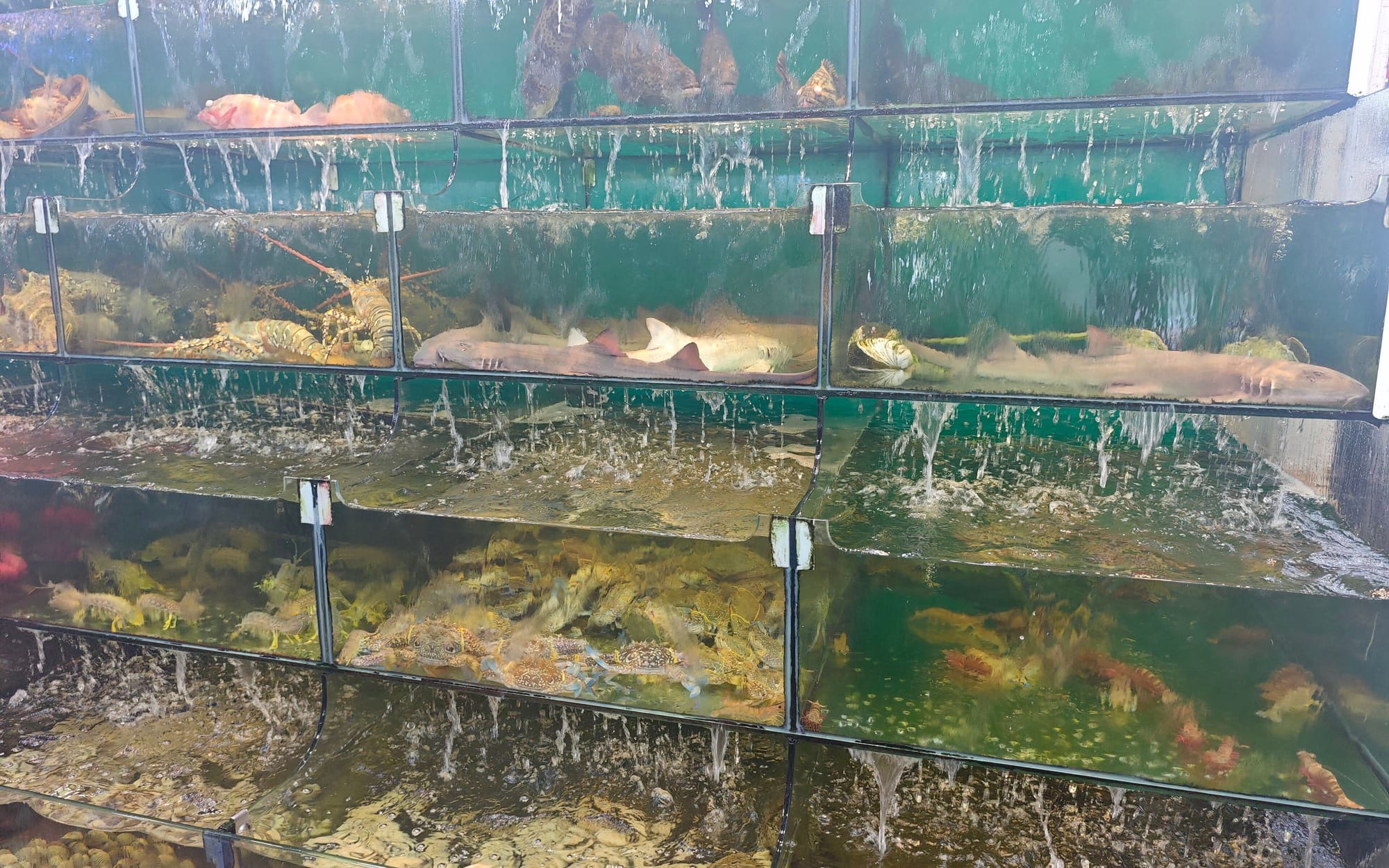
Most seafood restaurants on the island work the same way. The fish, crabs and shellfish are alive in tanks or on ice at the front. You choose, they weigh, you agree the price, and then they cook it the way you ask.
- By the kilo. Crab, fish, prawns, squid and snails are priced per kilogram, shell and all. The price is often on a board; if it is not, ask before you point.
- By the piece. Sea urchin, oysters and scallops are usually priced per piece.
- Cooking. Some places include the cooking in the price per kilo; others add a small charge per dish, and sauces or sides come separately. It is a fair question to ask: giá đã gồm chế biến chưa?, is cooking included?
- “Market price”. Fine, as long as someone tells you the number before it goes in the pot.
Ask to see the catch on the scale. Nobody minds, and it is how locals order too.
Phú Quốc seafood worth ordering in the dry season
From November to April the sea is calm, the boats go out every day, and this is when the island’s seafood is at its best.
- Ghẹ (blue swimmer crab). Hàm Ninh’s speciality: small, sweet crabs, steamed and eaten with a dip of salt, pepper and lime.
- Nhum (sea urchin). Grilled in the shell with scallion oil and crushed peanuts. Roughly 50,000 to 150,000 VND per urchin, depending on size. Our sea urchin guide covers where it is freshest.
- Gỏi cá trích (herring salad). Raw herring cured in lime and rolled in rice paper with herbs and coconut, the island’s signature plate.
- Mực (squid). Grilled whole, stir-fried with pepper, or as mực một nắng, dried for a single day in the sun.
- Ốc (sea snails). Dozens of kinds, from small spotted snails to big spiral shells, grilled, steamed with lemongrass or cooked in coconut milk.
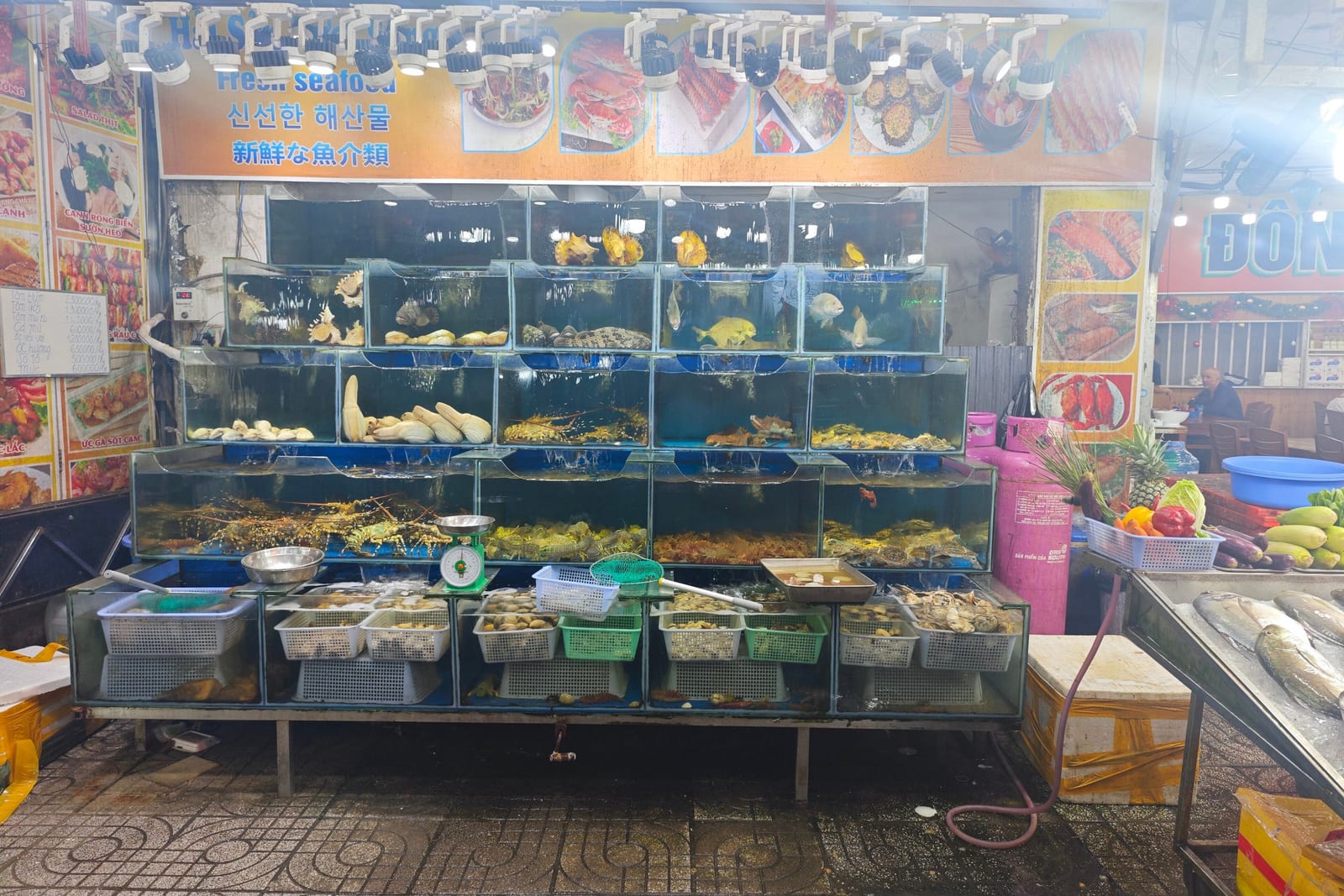
Live seafood at a Phú Quốc night market stall. Point at what you want, watch it weighed, then agree on how it’s cooked.
Where to eat Phú Quốc seafood
Hàm Ninh, on the east coast
The fishing village of Hàm Ninh, about 22 km east of Bãi Trường, around thirty minutes through the island’s interior, is where we send guests for crab. Restaurants sit on a long jetty over the water, and the market by the road sells the morning catch. Go for a late lunch. Our Hàm Ninh guide has the details.
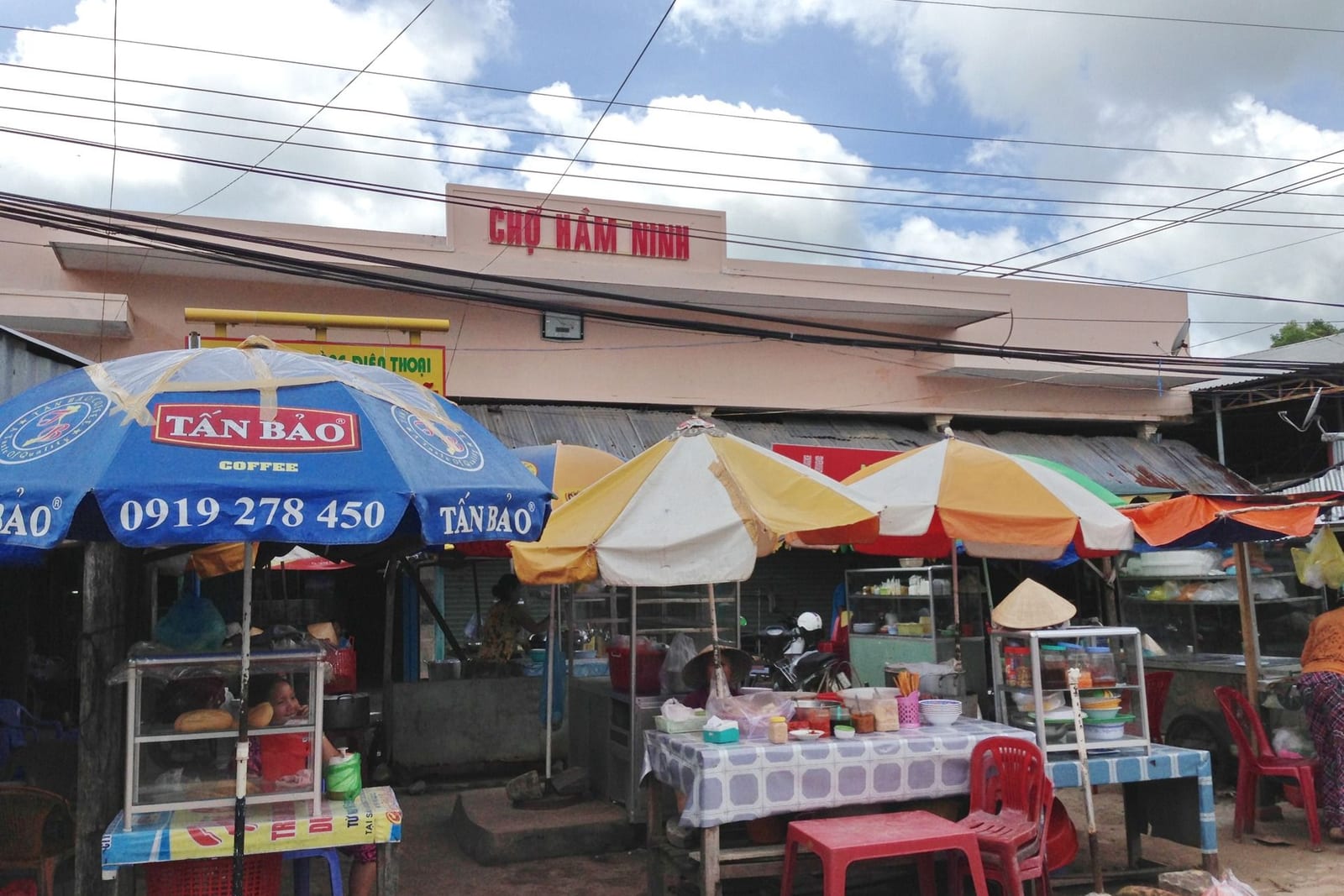
Hàm Ninh market, on the road down to the jetty. Mornings are for buying; the jetty restaurants do the cooking.
Gành Dầu, in the far northwest
Gành Dầu is a working fishing village at the northwest tip, a little over an hour from Bãi Trường. It is simpler and often cheaper than the tourist areas, with Cambodia on the horizon. Combine it with a north-island day.
The night market in Dương Đông
The Phú Quốc night market is the easiest seafood dinner on the island: choose from the tanks, pay by weight, and eat at long tables. It is convenient rather than cheap, so compare a few stalls before you sit down.
Close to Luna
The Sonasea food street on Bãi Trường has grilled seafood every evening, five minutes’ walk from our door. To the south, An Thới, the island’s biggest fishing port, has a market where the boats unload in the morning.
How not to overpay
- Ask the price per kilo, or per piece, before you choose.
- Watch the weighing, and agree the total before it is cooked.
- Ask whether cooking, sauces and sides cost extra.
- Avoid “market price” without a number.
- Check the bill against what you ordered, and pay in cash with small notes where you can.
- Ask your hotel for the current favourites. Good places change hands and standards; we keep our list up to date.
Raw dishes such as herring salad are best in the dry season, when the catch comes in every day. In the rainy months, choose cooked dishes if the boats have stayed in.
Phú Quốc seafood is one of the great pleasures of the island, and the people who sell it are mostly proud of it. Ask the price, watch the scale, and then take your time over the meal.
Photos: hero — FrogsLegs71, CC BY-SA 3.0, via Wikimedia Commons; in-body — FrogsLegs71, CC BY-SA 3.0, via Wikimedia Commons; trungydang, CC BY 3.0, via Wikimedia Commons.


Frequently asked questions
Is seafood expensive in Phú Quốc?
It depends where you eat. Fishing villages such as Hàm Ninh and Gành Dầu, and local places away from the busiest streets, are usually cheaper than restaurants in the tourist areas. Seafood is priced by the kilo or by the piece, so always ask the price before it goes on the grill.
What seafood is Phú Quốc famous for?
Blue swimmer crab from Hàm Ninh, sea urchin grilled with scallion oil, herring salad (gỏi cá trích), squid, and the island's many kinds of sea snails. Fish sauce made from local anchovies goes with all of it.
Where can I eat seafood near Bãi Trường?
The Sonasea food street, five minutes' walk from Luna, grills seafood every evening. For more choice, the night market in Dương Đông is about 25 minutes north, and the jetty restaurants of Hàm Ninh are about 30 minutes east.