
Dinh Cau Temple Phú Quốc: free lighthouse-shrine on a rocky cape over Duong Dong harbor. Best time to visit, dress code, and what's nearby.
Dinh Cau Temple Phú Quốc: 29 steps to the harbor view
Most mornings, a few fishing-boat captains climb Dinh Cau Temple Phú Quốc before heading out to sea. They burn incense at the altar, bow briefly, and go. The tradition is over 300 years old and still happening now — as unhurried as buying ice on the way to the docks. That quiet matter-of-factness is what makes Dinh Cau worth the drive. It’s not a monument built for tourists; it’s a working shrine on a rocky cape at the mouth of Duong Dong River, and the view from the top is some of the best on the island.
What Dinh Cau Temple is
Dinh Cau is two things occupying the same promontory: a temple and a lighthouse. The temple is dedicated to Thien Hau, the sea goddess that Phú Quốc’s fishing community has trusted to keep the fleet safe for generations. Built in the early twentieth century on a site where the faithful had already gathered for decades, it was formally recognized as a provincial cultural relic in 2012.
The Dinh Cau lighthouse beside it has stood since the 1930s and still functions — a compact yellow tower marking the river mouth where Duong Dong’s trawlers come and go. Neither structure is large. Together on the headland they are exactly right.
The climb up Dinh Cau: 29 steps to the harbor
A set of 29 stone steps winds up the rock face to the main temple courtyard. Worn smooth in the center from years of daily use, slightly uneven, a little slippery if it has rained. Two minutes up.
At the top the courtyard opens to a terrace facing the sea. The view looks north across Duong Dong’s fishing harbor: long wooden trawlers moored with nets piled on the decks, smaller boats tracing lines between them, and behind it all the town spread along the waterline. To the west — the Gulf of Thailand, open and unhurried.
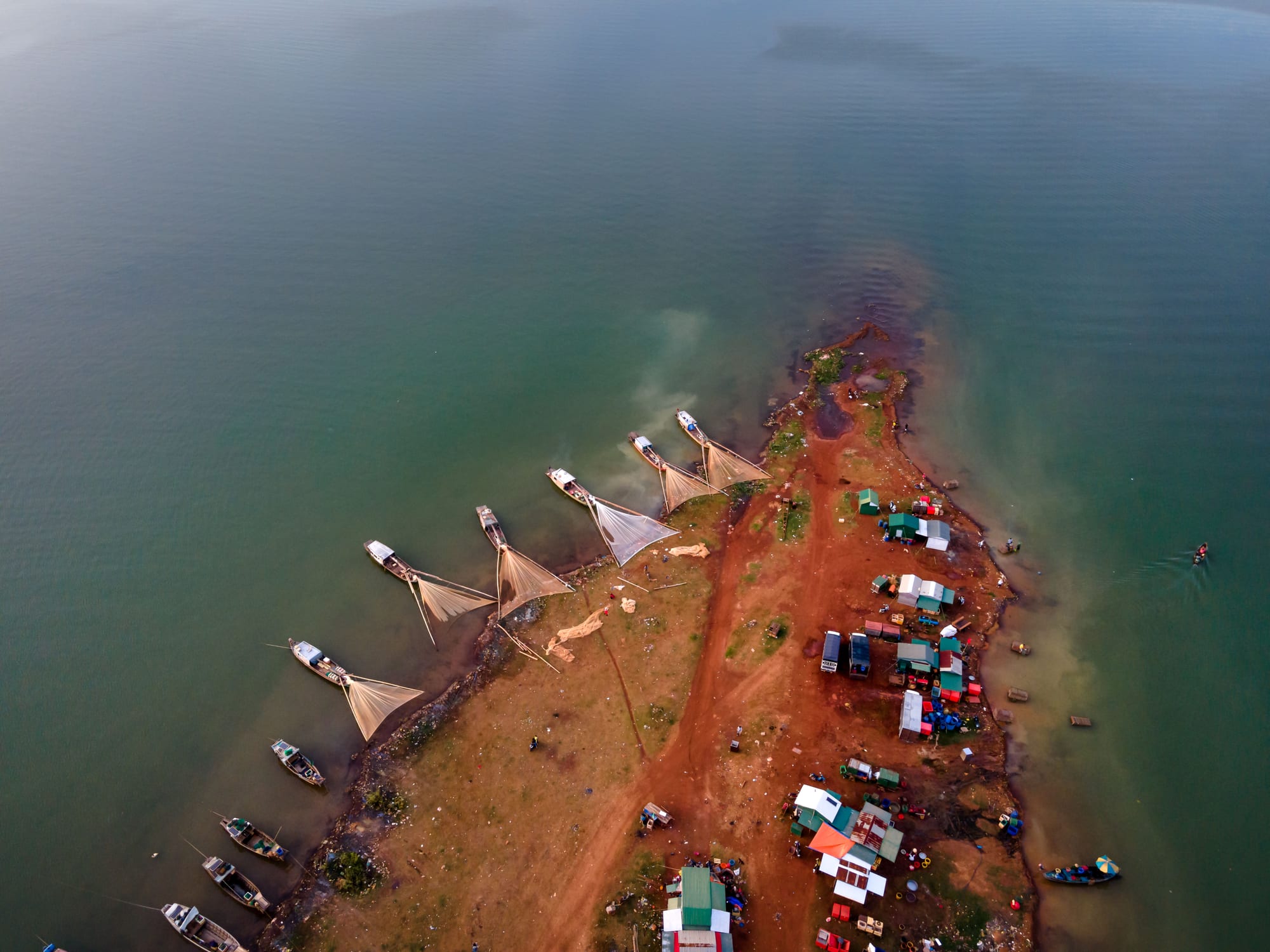
The view north from Dinh Cau’s terrace: Duong Dong’s working fishing fleet, still the same trade it has always been.
This scene is worth stopping with. The fleet has worked these waters for centuries. From the terrace you see both versions of Phú Quốc at once — the harbor boats in the foreground, the coastal hotels beginning to appear behind them. It’s the same island, two timelines side by side.
Morning or sunset: picking your time at Dinh Cau
Both are worth it. They are different enough to plan around.
Early morning (7:00–9:00am)
This is when Dinh Cau is at its most itself. The fishing captains come before the boats leave — incense lit, a moment at the altar, gone. The harbor below is at its most active: crews unloading night catches, engines starting, the smell of saltwater and diesel coming up from the water. The light before nine is soft, the terrace is quiet, and the harbor reflection in the river mouth is sharp on calm days.
In the wet season (May–October), mornings are often overcast — which gives the rocky promontory its own kind of atmosphere, closer to how it looked before anyone thought to photograph it.
Late afternoon and sunset (5:00–7:30pm)
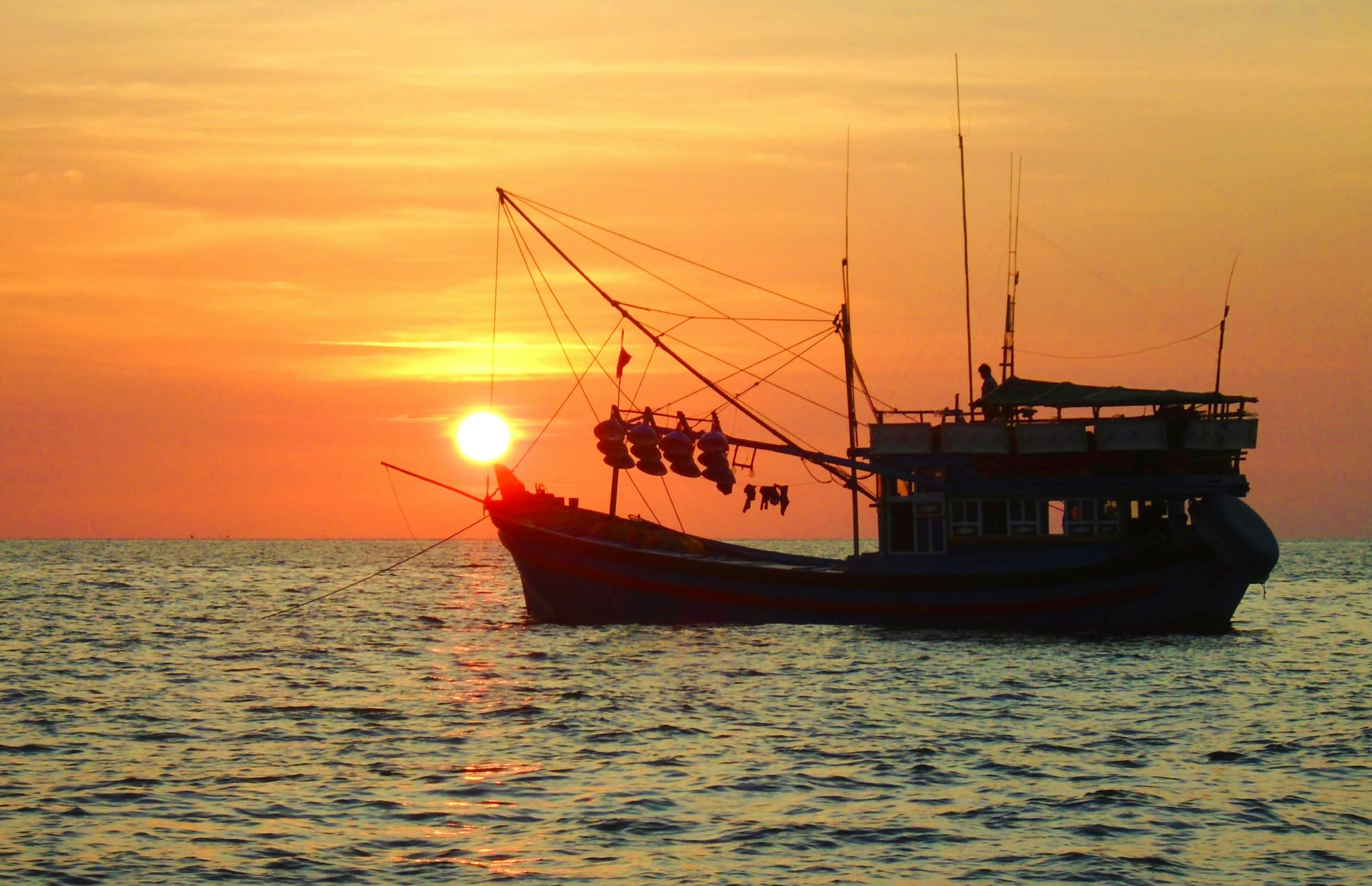
Sunset from the Dinh Cau terrace is the more dramatic option. The cape faces west, and on clear evenings the sun drops directly into the Gulf of Thailand, turning the water orange-red and silhouetting the lighthouse above. Sugar-cane juice vendors set up at the base of the steps in the late afternoon — one cold glass on the way up is a reasonable idea.
It gets crowded at golden hour. Both locals and visitors come for the sunset. Arrive forty minutes before official sundown to find your angle before the terrace fills in.
Before you go: dress code and temple rules
Dinh Cau is an active place of worship — worth knowing before you arrive.
- Cover shoulders and knees. Long shorts and a T-shirt are fine. There’s no enforcement, but there is expectation: people are genuinely praying here every day.
- Remove shoes before entering the shrine room. A rack at the entrance.
- No photography inside the shrine. The lighthouse, the terrace, the harbor view — all fine. The altar room where the incense burns — leave the camera down.
- Arrive and leave quietly. The fishermen doing their morning ritual are not a performance.
Combining Dinh Cau with a Duong Dong evening
The temple sits at one end of the street where the Phú Quốc night market runs nightly. The natural combination: visit Dinh Cau in the late afternoon, then walk the length of the market as the stalls set up from five o’clock. Grilled seafood, bánh mì, fresh juices, salt coffee. The whole market takes about an hour if you stop to eat.
Dinh Cau Beach lies directly adjacent to the promontory — a small strip of sand at the base of the cape. It’s not a swim beach (the river mouth brings currents and chop), but it’s a fine place to sit on a seawall and watch the boats.
A scooter from Bãi Trường is the easiest approach: the coast road north from Sonasea is a pleasant twenty-minute ride with the sea to your left. If relying on Grab, call a return car before you start back down from the temple — pickups from Duong Dong in the evening can be slow.
Luna Oriental is at SS27 Sonasea, Bãi Trường, Phú Quốc, An Giang — a 20-minute drive south of Dinh Cau Temple. Ask at the front desk and we’ll write the route for your driver.
Photos: hero — source to verify (confirm before commercial use); in-body — Quang Nguyen Vinh on Pexels.
Frequently asked questions
How far is Dinh Cau Temple from Bãi Trường?
About 20–25 minutes north along the coast road. Grab works from Bãi Trường; there's free parking at the base of the promontory for scooters or rental cars. Ask at Luna's front desk and we'll write down the route for your driver.
Is entry to Dinh Cau Temple free?
Yes — completely free. Open daily from 7:00am to 8:30pm. No ticket booth, no entrance fee. Just walk to the base of the rock and climb the 29 steps.
Can I take photos at Dinh Cau?
Photography is welcome outside — the lighthouse, the cape, the harbor panorama below. Inside the shrine itself, no photography out of respect for worshippers. Remove shoes before stepping through the shrine entrance.
When is the annual Dinh Cau festival?
The festival falls on the 15th of the 10th lunar month — usually late October to early November. Fishermen and locals gather in traditional dress for ceremonies honoring Thien Hau, the sea goddess who protects the fleet. If your trip overlaps, it's worth an evening.