
Free farm tours · coast road, 15 min north · the demo + the grit test
Phú Quốc pearl farms: what's free, what's real, what to skip
Phú Quốc’s Vietnamese nickname is đảo ngọc — Pearl Island. The Phú Quốc pearl farms along the southwest coast are a big part of why: the warm, fairly calm sea between the west coast and the An Thới islands has been used to culture pearls since the 1990s, and the main farms open their doors to visitors for free, demo included. It’s one of the easiest half-outings from Bãi Trường — and in the rainy months, one of the most dependable.
Why pearls grow well in Phú Quốc
Pearl oysters are fussy. They want warm, clean, salty water without violent currents, and they want it year-round. The stretch of sea off Phú Quốc’s southwest coast provides exactly that, which is why pearl culturing took root here decades ago and stayed.
The process is slower than most visitors expect. A technician opens a living oyster just far enough to implant a small nucleus, then the oyster goes back into the sea in a hanging basket. Over the following years it coats the intruder in layer after layer of nacre — the same iridescent material lining the inside of the shell. Only a portion of the oysters survive to harvest, and only some of those produce a pearl worth setting. That failure rate is most of the answer to “why do real pearls cost what they cost.”
What the free pearl farm tour shows
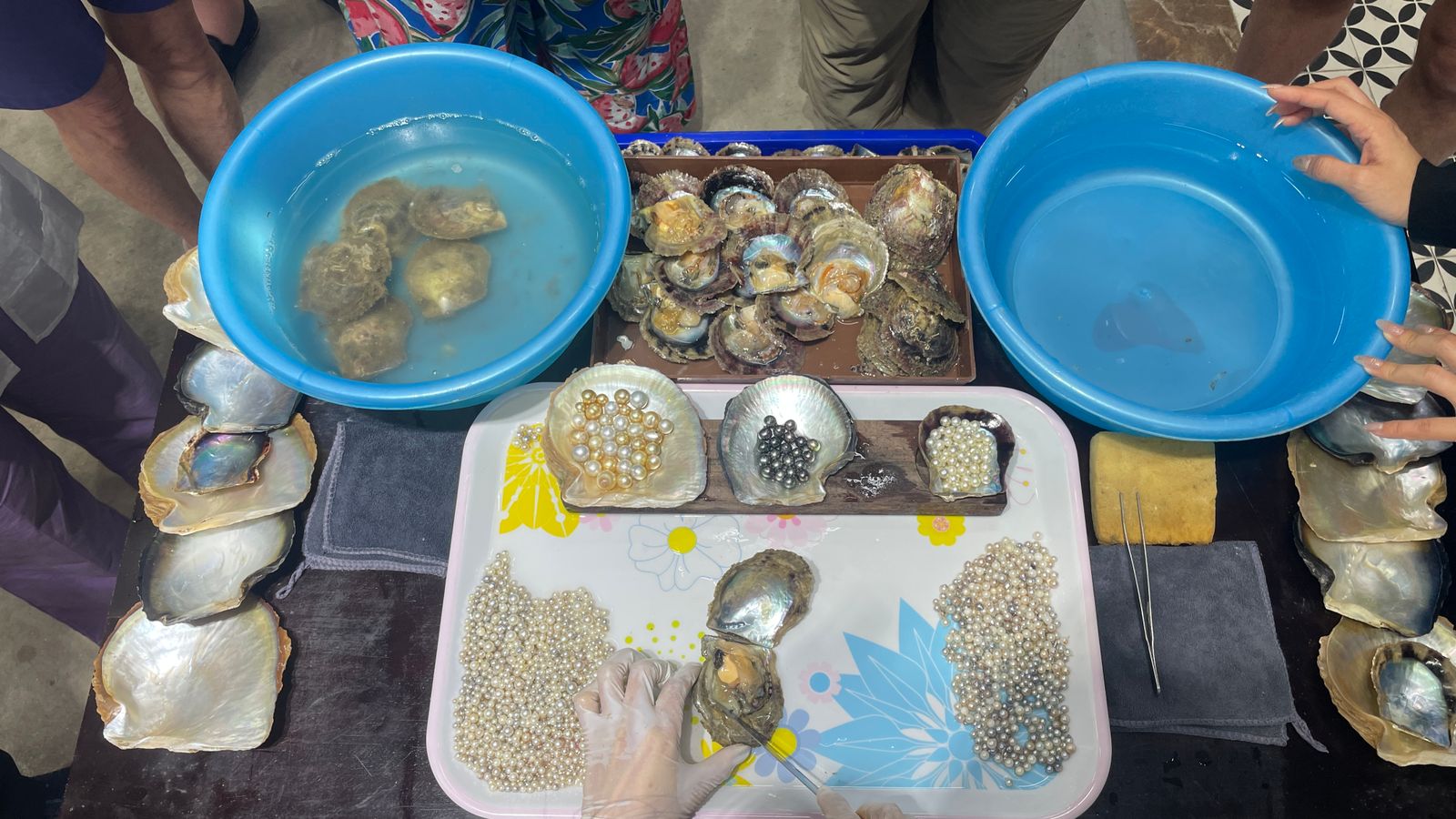
You don’t need a booking. Walk in, and someone will lead you through the short version of the story above: the implanting table, the baskets, the sorting trays where pearls get graded by size, shape and colour.
The set piece is the oyster-opening demo — a staff member shucks a live oyster in front of you and tips a pearl out of it into your hand. It’s brief and a little theatrical, and it works on everyone, including people who came in sceptical.
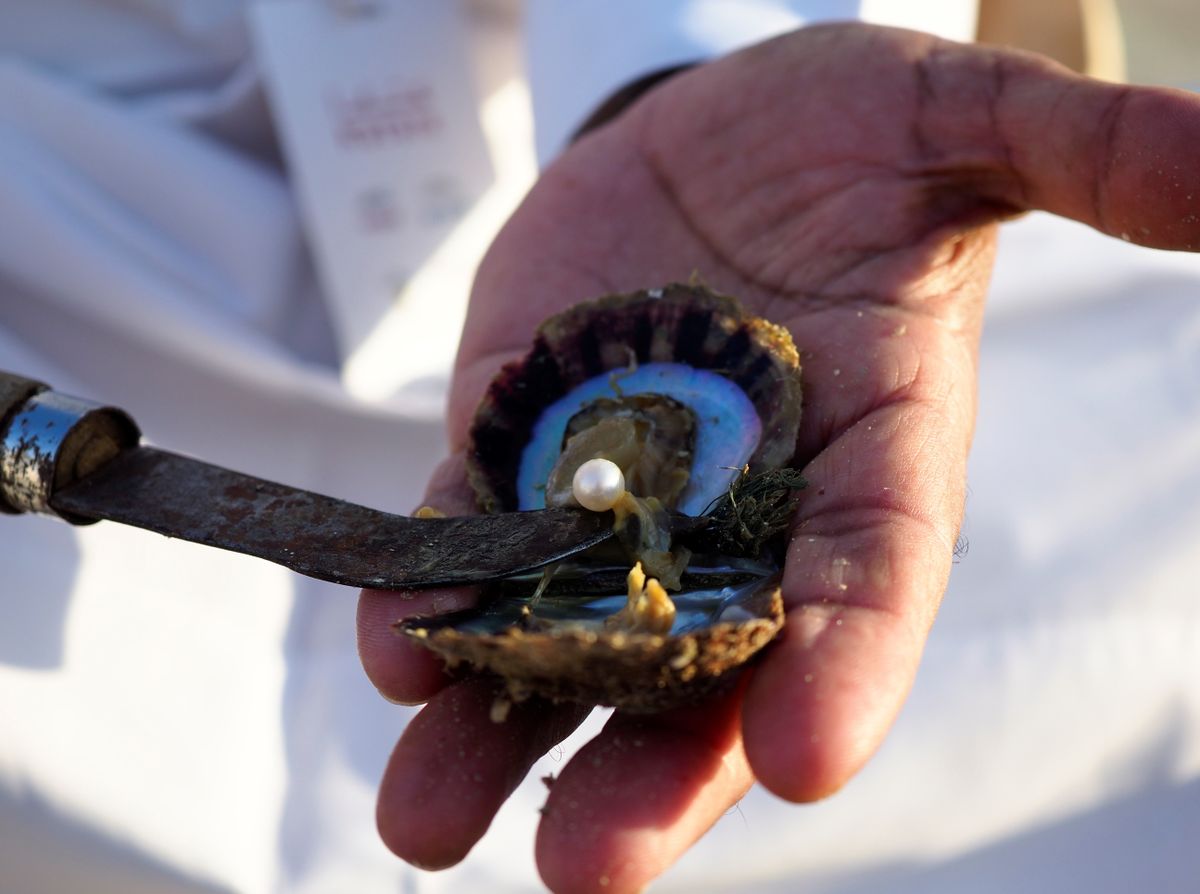
The opening demo: one oyster, one pearl. Tours are short — 20 to 45 minutes — and this is the part people remember.
Honest take: every tour ends in the showroom, and the staff will walk with you through it. Nobody blocks the exit. Browse, ask questions, leave if you want — the visit is worth it for the demo alone, and knowing the showroom is coming makes it easy to enjoy.
Real or fake: how to check a pearl
Phú Quốc sells a lot of pearls, and not all of them are what the label says. A few checks that take ten seconds:
The grit test. Rub two pearls gently against each other (or, classically, against the edge of a front tooth). Real nacre feels faintly gritty, like very fine sandpaper. Glass and plastic imitations slide smooth.
Look for small flaws. Real cultured pearls are never quite identical — tiny dimples, slight variations in shape and tone along a strand. A necklace of perfectly uniform spheres at a too-good price is answering its own question.
Weight and temperature. Real pearls are cool to the touch when you pick them up, and noticeably heavier than plastic beads.
Paperwork. The established farms issue certificates, some with a long-term guarantee. If you’re buying anything beyond a souvenir, keep the certificate — it matters for resale and repairs.
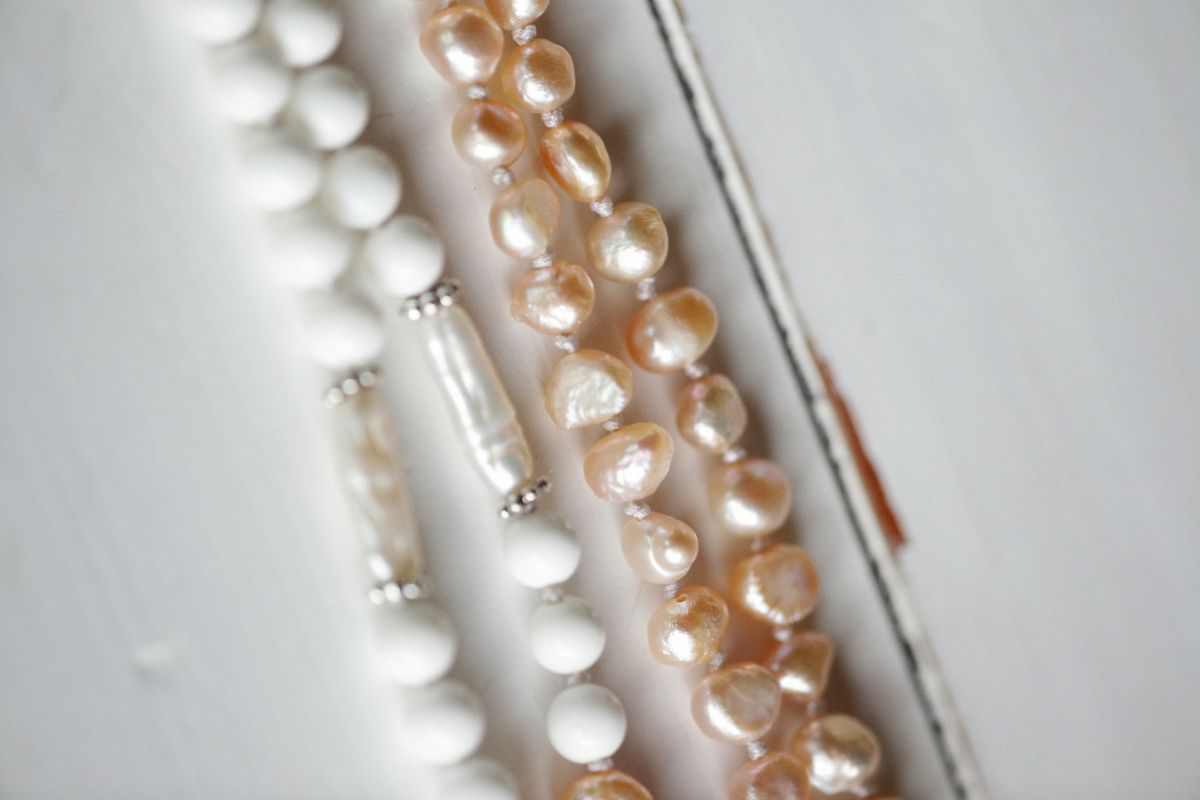
No two real pearls match exactly — the small variations along a strand are the point, not a defect.
Where you buy matters more than any test. Cheap pearl jewellery at a night market stall is rarely the cultured Phú Quốc pearl the island is known for. If pearls are the reason you’re shopping, buy at a farm showroom where the goods, the certificate and the seller all sit in one place.
Which farm, and how to plan it from Bãi Trường
The farms cluster along the coastal road that runs north from Bãi Trường toward Dương Đông — all within 10–20 minutes of Luna by car or Grab.
- Ngọc Hiền — in Dương Tơ, the biggest of them, culturing pearls since 1994. The fullest version of the tour.
- Long Beach Pearl — on Trần Hưng Đạo, with a small museum corner alongside the showroom. The easiest to combine with a Dương Đông errand.
- Quốc An — smaller, same idea, often quieter.
They keep long hours — roughly 8am to 7pm daily — and an hour covers the visit comfortably. It pairs naturally with a wet afternoon: if the sky has closed in, this and the other ideas in our rainy season guide will carry the day. Ask the front desk to call a car, or message us the evening before and we’ll have one ready.
A Phú Quốc pearl is one of the few souvenirs from the island that genuinely comes from the water you’ve been swimming in. Twenty minutes of demo, ten seconds of grit test, and you’ll bring home the real thing.
Photos: hero — Clifford Coulter on Pexels; in-body — Natalya Rostun and Alexey Demidov on Pexels.
Frequently asked questions
Is visiting a Phú Quốc pearl farm free?
Yes. The main farms — Ngọc Hiền, Long Beach Pearl, Quốc An — let visitors in free of charge, no booking needed. The guided part takes 20–45 minutes including the oyster-opening demo. It ends in a showroom, but there's no obligation to buy.
How can I tell if a Phú Quốc pearl is real?
Rub two pearls gently together — real ones feel slightly gritty, imitations slide smooth. Real pearls are cool to the touch, heavier than plastic, and never perfectly identical along a strand. At the farms, ask for a certificate; the established ones issue paperwork with a guarantee.
How far are the pearl farms from Luna Oriental?
They sit along the coast road between Bãi Trường and Dương Đông — about 10–20 minutes by car or Grab from Luna at SS27 Sonasea. The front desk can call a car; an hour is enough for the visit.