
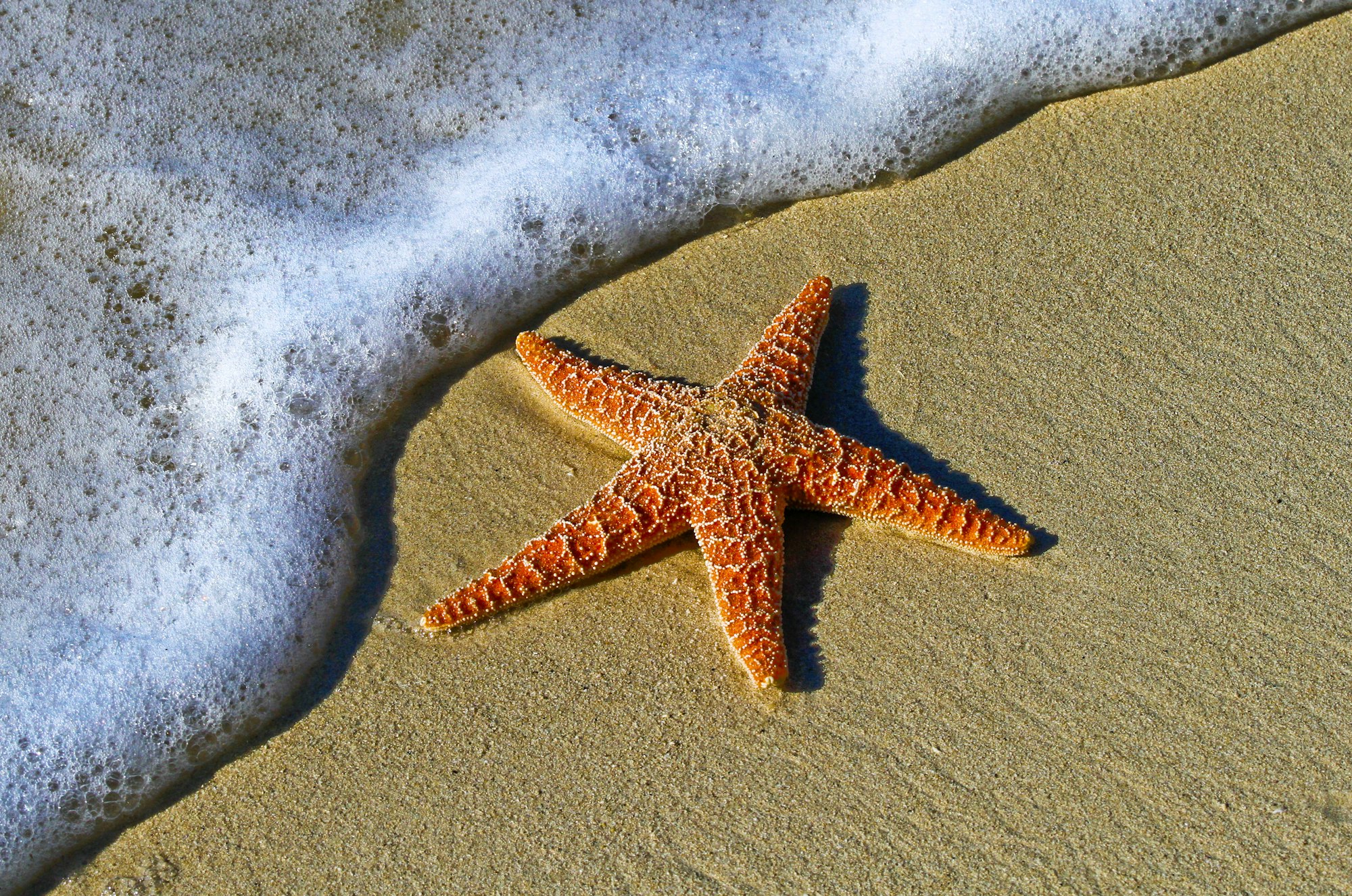
Bãi Rạch Vẹm starfish beach is at the north tip · 40 km from Luna · go at low tide, treat the sao biển kindly
Bãi Rạch Vẹm Phú Quốc: where the starfish actually live
If you’ve seen photos of Phú Quốc with red starfish resting in ankle-deep water, that’s Bãi Rạch Vẹm — not Bãi Sao, not Bãi Trường. It’s a quiet bay at the north tip of the island, about an hour from Luna, where shallow water and a sandy bottom let you walk out and see sao biển without a mask. On the right morning it’s genuinely one of the prettiest things on Phú Quốc. On the wrong morning it’s just a beach with seafood huts. The difference is the tide and the time you arrive.
Where Bãi Rạch Vẹm is and how to get there from Luna
Bãi Rạch Vẹm sits in Gành Dầu commune at the far north of Phú Quốc, on the west coast just past Vinpearl Safari. From Luna at SS27 Sonasea on Bãi Trường it’s roughly 40 km north — about an hour by car on the coastal road through Dương Đông. We can book a private car for around 500,000–600,000 VND one way, or a round-trip with a 2–3 hour wait for around 1,200,000 VND. Grab works for the outbound leg from Luna but is unreliable for the return, so a return car or scooter is the safer plan.
By scooter the ride takes 80–90 minutes and the last 4 km off the main road is a narrow lane through cashew orchards. It’s a pretty drive in dry weather — slick and not fun in rain. If you’re already heading to the north for Vinpearl Safari or the cable car, stack Bãi Rạch Vẹm into the same day.
Why Rạch Vẹm has starfish when other beaches don’t
Most of Phú Quốc’s beaches drop into deeper water within a few meters of shore. Bãi Rạch Vẹm is different: the bay is shallow for 200–300 meters out, with a soft sandy bottom and a slow current. That mix — calm water, sand, and shelter from the open sea — is exactly what red knobby starfish (Protoreaster nodosus) settle into. They feed on the bottom, mostly at low tide, and on a quiet morning you can wade out and find ten or fifteen of them spread across an area the size of a tennis court.
The bay also has the stilt-house seafood restaurants (nhà sàn hải sản) that Phú Quốc is known for — wooden platforms built over the water, where you eat with your feet hanging just above the sea. The view from the platforms is half of why people come.
When to go: tide, season, time of day
This is the only part of the trip you really need to get right.
- Season. Dry season, December through April, is when the water is clearest and the starfish easiest to see. From May to October the water gets stirred up by the southwest wind and visibility drops. Our rainy-season guide covers what to do in those months instead.
- Tide. Go at low tide. The starfish sit on the bottom — when the tide is high, you’re looking down through a meter of water and can barely see them. The Vietnamese tide chart on tide-forecast.com shows Phú Quốc tide times.
- Time of day. Aim to arrive between 8 and 10am. The light is soft, tour buses haven’t shown up yet, and the restaurants are setting up rather than full. By midday the bay can get crowded and the bottom gets stirred up.
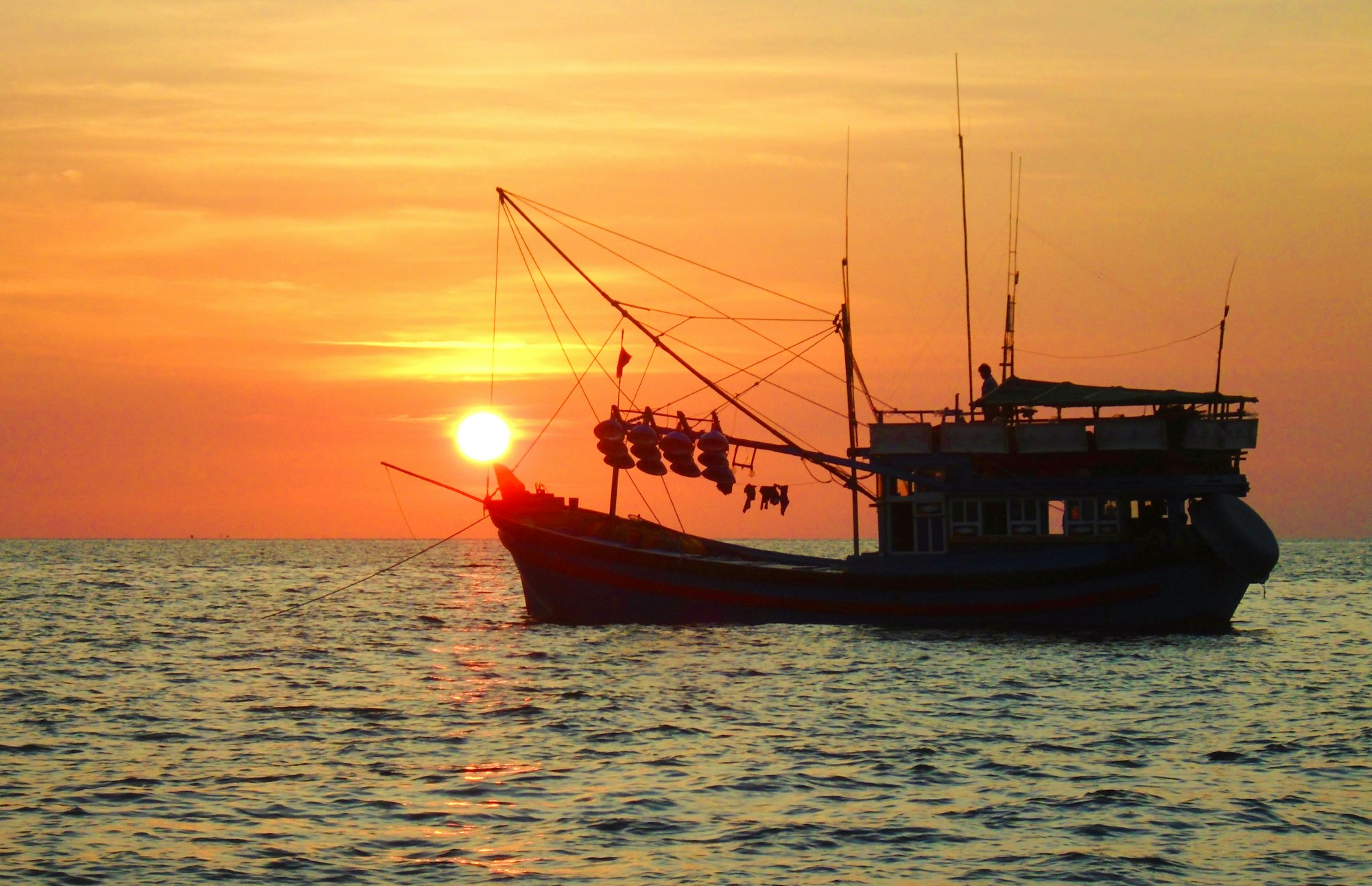
Caption: The same north-end coast at the other end of the day — wooden fishing boats heading out from Phú Quốc.
How to behave around the sao biển
This bay has gotten a lot of attention in the last few years, and the starfish population has dropped noticeably. The reason is simple: visitors lift them up for photos, and a starfish out of water for even a couple of minutes will likely die. They look sturdy but they breathe through their underside and dry out fast.
So:
- Don’t lift starfish out of water. Squat next to them, photograph from the surface, move on. The photos come out better anyway — the water adds depth.
- Don’t stack them. Or arrange them. Or move them somewhere “prettier” for the shot.
- Watch your step. Shuffle your feet rather than placing them down hard. The starfish are the same color as the wet sand from above.
- No sunscreen in the water. A long-sleeve rashguard is kinder to the bay than reef-safe lotion. If you must apply something, do it 30 minutes before you arrive.
The seafood restaurants on the bay now post signs asking guests to follow these rules — please honor them. It’s the difference between Bãi Rạch Vẹm in five years still having starfish, or being remembered as the bay that used to.
What to eat at the stilt-house restaurants
The string of nhà sàn restaurants along the bay all work the same way: you pick from the tanks at the front, agree the kilo price before they cook, and they bring it out to your table on the platform. What’s worth ordering:
- Steamed mantis shrimp (bề bề / tôm tích hấp) — sweet, simple, and what the locals come here for.
- Grilled scallops with peanut and scallion oil — the version up here is excellent.
- Boiled snails with lemongrass (ốc len xào dừa) — a small plate to share.
- Whole grilled fish — ask what came in that morning, not what’s on the menu.
Expect 500,000–900,000 VND for two with a couple of beers. Mr. Hùng and Hải Đăng are two of the long-running restaurants that locals point guests toward. Skip the very first restaurant you see from the parking area — it’s the most marked up. Walk past two or three.
Pairing Bãi Rạch Vẹm with the rest of the north
If you’ve driven this far, don’t drive straight back. The north end has more in it than people think:
- Vinpearl Safari is 15 minutes east — best for families with kids, opens at 9am, plan 3–4 hours.
- Mũi Gành Dầu is 20 minutes further north — a quiet headland with views toward Cambodia and a small fishing port.
- VinWonders sits next to Safari if your group has anyone under twelve.
A reasonable day from Luna: leave at 7:30, starfish and breakfast at Rạch Vẹm by 9, Safari from noon, lunch on the way back, home by late afternoon.
For directions and a car the front desk can arrange, see our how to find us page — we’re happy to set the route up before you arrive.
Photos: hero — Pedro Lastra on Unsplash; in-body — OnBird Phu Quoc on Unsplash.
Frequently asked questions
When is the best time to see starfish at Bãi Rạch Vẹm?
Dry season, December through April, on a low-tide morning before 10am. Check a tide chart the night before — at high tide the starfish are too deep to see from the surface, and the water is murkier.
How far is Bãi Rạch Vẹm from Luna Oriental?
About 40 km north, roughly 1 hour by car from SS27 Sonasea on Bãi Trường. A private car one way is around 500,000–600,000 VND, or pair it with Vinpearl Safari which is 15 minutes away.
Is it okay to pick up the starfish for a photo?
No. Lifting a starfish out of the water kills it within minutes — they breathe through their underside. Photograph them where they sit, in shallow water, and leave them alone. Local restaurants now ask guests to follow this rule.