

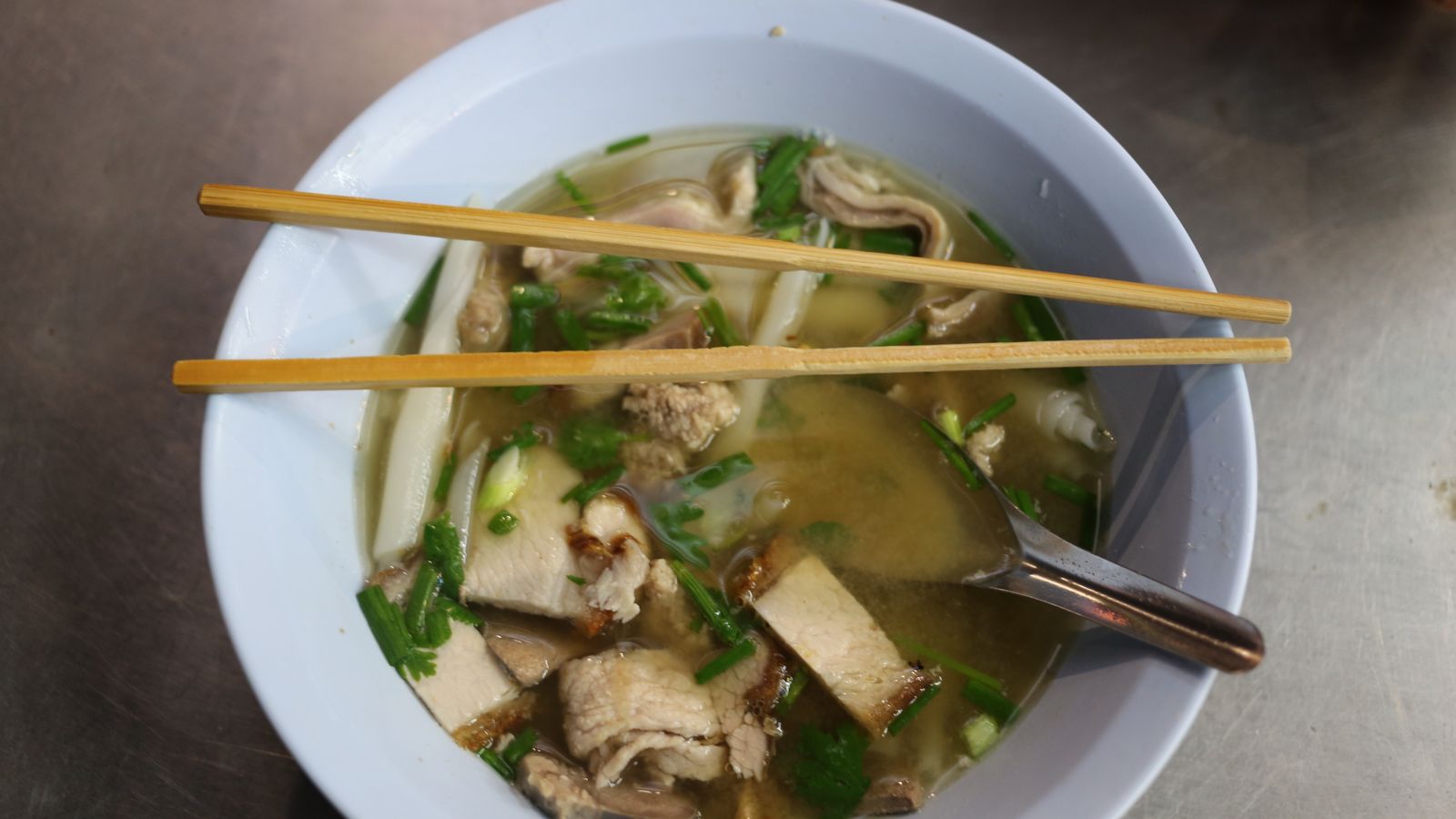
Local breakfast · Dương Đông · coconut fish broth
Bún kèn Phú Quốc: the coconut fish noodle soup most guests miss
Most guests who ask for a breakfast recommendation in Phú Quốc get pointed to bún quậy — the springy noodle soup with dipping sauce that every guesthouse can direct you to. Bún kèn is the other Phú Quốc noodle soup: no English menu, no tourist signage, eaten on plastic chairs at 7 in the morning before the town properly wakes up. Finding it takes a small amount of effort. It’s worth considerably more than that.
What bún kèn Phú Quốc actually is
Bún kèn is a rice vermicelli soup with a broth built on fish paste and coconut milk. The name kèn refers to the fish preparation — the flesh is pounded fine, then cooked down with turmeric, lemongrass, and galangal before being simmered with coconut milk until the broth turns slightly thick and golden. A bowl arrives with thin rice noodles, a plate of fresh herbs, and a wedge of lime. You assemble at the table: herbs torn in, lime squeezed, chilli if you want it.
The dish belongs to southern Vietnam — versions of it exist throughout Kiên Giang province and the Mekong delta, but Phú Quốc’s version tends to use more coconut and a local fish paste that has a different depth to it than mainland preparations. The flavour is rich without being heavy: coconut-forward, aromatic, and genuinely warming in a way that makes sense for a meal beside the sea before 8 am.
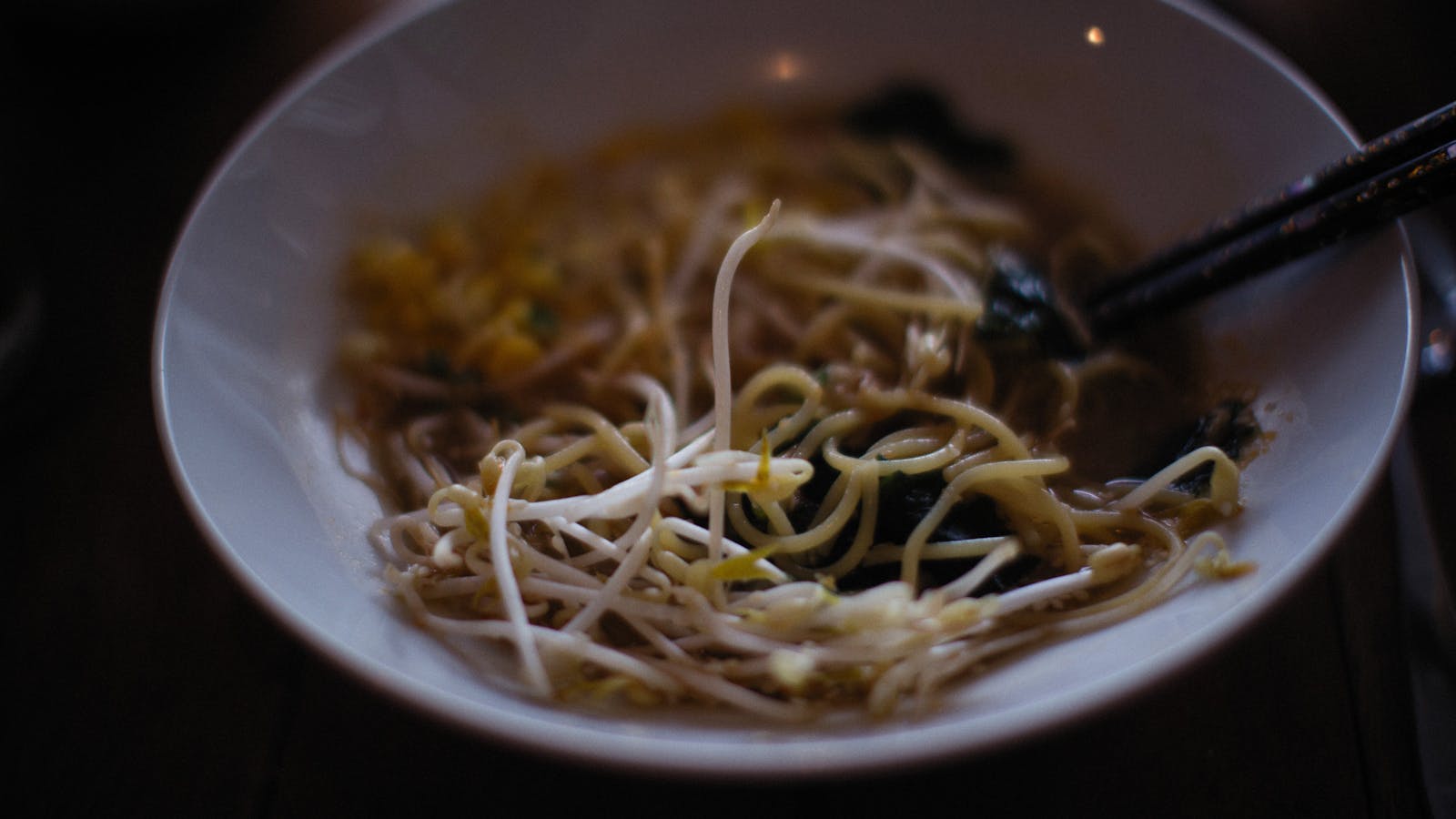
Rice noodles, hot broth, herbs on the side — the assembly is half the ritual of eating bún kèn.
Where to eat bún kèn in Phú Quốc
Dương Đông’s covered market (Chợ Dương Đông) is the most consistent place to find bún kèn. The stalls inside the market and a few shops immediately surrounding it have been serving the dish for decades. It’s not tourist-oriented: you sit down, point at what the person next to you is eating, and a bowl arrives.
A handful of neighbourhood spots scattered around the Dương Đông town centre also serve bún kèn in the early morning. These tend to be run by the same family for years, quieter than the market, and priced the same — around 30,000 to 50,000 VND per bowl. The Phú Quốc night market area occasionally has bún kèn vendors in the morning before the evening market sets up, but it’s less reliable than the covered-market stalls.
If you’re staying at Luna Oriental and want a specific recommendation, ask at the front desk the evening before — we can usually point you to a stall that’s consistently open.
How to eat it: the ritual matters
The herbs matter more in bún kèn than in most noodle soups. The standard side plate includes bean sprouts, fresh mint, thinly-shredded banana blossom, and sometimes sawtooth coriander. Add a small amount first, taste the broth, then add more. The coconut and fish paste base is strong enough to stand on its own, but the crunch of bean sprouts and the brightness of fresh mint change the character of the bowl entirely by the last few spoonfuls.
Some stalls serve bún kèn with a side of bánh mì for dipping. It sounds like an odd pairing, but the bread cut against the coconut richness works well. If it’s on the table, try a piece.
Eat it hot and fast. The noodles continue absorbing the broth and the herbs wilt once they hit the heat — bún kèn is not a dish to pick at for 20 minutes. Most people finish a bowl in eight to ten minutes, then order another.
When to go and what to expect
Bún kèn is a morning dish and almost entirely unavailable in the evening. Serious stalls open around 6 am and sell out before 10 or 11 — the broth is made in one batch at the start of the day, and when it’s gone, it’s gone. Arriving after 10 am usually means empty pots and stacked chairs.
Weekdays are quieter than weekends at the market stalls, which makes the whole experience feel more relaxed and more genuinely local. Rainy season (May–October) doesn’t affect availability — the market is covered and the stalls operate regardless of the weather.
One practical thing: bring small bills. A bowl costs 30,000–50,000 VND and most stalls don’t carry change for 200k or 500k notes. And go hungry — one bowl rarely feels like enough.
Getting there from Bãi Trường
Luna Oriental sits at SS27 Sonasea, Bãi Trường — about 8 km south of Dương Đông market. The drive takes 15–20 minutes by scooter along the main coast road, and Grab is reliable on this stretch. If you’re planning a morning trip, leaving around 7 am gives you the best chance of hitting the stalls at peak freshness.
Bún kèn doesn’t show up on most tourist food lists for Phú Quốc. That’s a reasonable part of why it’s worth going out of your way for.
Photos: M Snedelrev and Alexey Demidov on Pexels.
Frequently asked questions
What does bún kèn taste like?
Rich and coconut-forward, with a deep fish paste base that's more complex than regular pho. The broth is slightly thicker, golden from turmeric, and warmly aromatic from lemongrass and galangal. First-timers usually find it sweeter than expected.
Is bún kèn a breakfast or dinner dish in Phú Quốc?
Almost exclusively breakfast — stalls open around 6 am and sell out by 10 or 11. The broth is made in one batch at the start of the day. Don't plan to find it in the evening. Dương Đông market is the most reliable spot in the early morning.
Is bún kèn easy to find in Phú Quốc?
Less so than bún quậy — it's less marketed to tourists and there are no English signs. Dương Đông's covered market and a few neighbourhood spots near the town centre are your best bets. Ask your hotel the evening before for a specific stall.